
Design-build consolidates design and construction under one team, which reduces miscommunication, protects budgets, and shortens timelines. For luxury home renovations, where custom finishes, high-end materials, and precise execution matter most, this integrated approach gives homeowners a more controlled, cohesive experience from the first concept meeting through final walkthrough.
Luxury renovations come with a level of complexity that most standard remodels don’t. Custom millwork, imported stone, smart home integration, structural changes — each layer adds coordination demands that a fragmented process handles poorly. Design-build was built for exactly this kind of project, and the difference shows at every stage.
Key Takeaways
- Design-build puts your architect, designer, and contractor on the same team, eliminating the communication gaps that cause delays and cost overruns.
- Luxury projects require early-stage budget alignment between design decisions and construction costs — something design-build handles by default.
- A single point of accountability means you have one team to call, one contract to manage, and one consistent vision driving the project forward.
- Design-build timelines tend to move faster because design and preconstruction planning happen in parallel rather than in separate sequential phases.
- When unexpected conditions are discovered mid-project, an integrated team can adapt without halting work or renegotiating across separate contracts.
- Choosing the right design-build firm matters as much as choosing the right approach — vetting experience with luxury-level finishes and complex scopes is essential.
Things You Must Know
1. Design and Budget Must Work Together from Day One
In a traditional process, an architect designs a home and a contractor bids on it afterward — sometimes revealing a significant gap between what was designed and what the budget actually supports. With design-build, your construction team is part of the design conversation early, which means material selections and structural decisions are evaluated for real-world cost as they’re made. For luxury renovations, this matters because high-end specifications can escalate quickly without early cost input guiding the process.
2. Not Every Design-Build Firm Has Luxury Experience
Design-build is a delivery method, not a quality guarantee on its own. A firm that specializes in standard residential remodels may not have the subcontractor relationships, finish knowledge, or project management depth required for a high-specification renovation. Before selecting a firm, review their portfolio carefully and ask specifically about their experience managing complex scopes, imported materials, and custom fabrication timelines.
3. The Preconstruction Phase Is Where Luxury Projects Win or Lose
Most delays and cost surprises in luxury renovations trace back to insufficient planning before demolition begins. Design-build firms invest heavily in the preconstruction phase, where structural assessments, finish lead times, permitting, and sequencing are resolved before work starts. Skipping or rushing this phase is one of the most common mistakes homeowners encounter, regardless of which delivery method they choose.
What Makes Luxury Renovations Different from Standard Remodels?
A standard bathroom remodel and a luxury primary suite renovation may look similar on paper — both involve tile, plumbing, and fixtures. The execution, however, operates at a completely different level of complexity.
Luxury projects typically involve custom-fabricated elements with long lead times, finishes that require specialized installation trades, structural modifications for open-concept spaces or added square footage, and technology integration for lighting, audio, and climate systems. Each of these variables introduces coordination demands that compound quickly when design and construction teams aren’t aligned.
Industry estimates suggest that renovation projects using fragmented design and construction teams experience higher rates of scope creep and change orders compared to projects managed under an integrated delivery model, particularly at the luxury and custom-home level where specification changes have outsized cost impacts.
How Design-Build Addresses the Core Challenges of Luxury Renovations
The design-build model solves problems that are inherent to the traditional design-bid-build process, not as a workaround, but as a structural feature of how the work is organized.
Understanding how design-build compares to traditional construction makes the advantages clearer. In a conventional setup, your architect produces drawings, you solicit bids from contractors who had no input in the design, and you end up managing the relationship between two parties who may have conflicting priorities. In design-build, those parties are one team with one contract and one shared goal.
Single-Point Accountability
One of the most practical advantages for luxury homeowners is having a single firm responsible for outcomes. If a custom tile delivery runs late, your design-build team manages the schedule impact. If a structural discovery changes the scope, the same team assesses it, prices it, and adjusts the plan. You don’t mediate disputes between an architect and a contractor who each have separate interests in how the problem is framed.
Real-Time Cost Control
Luxury renovations are particularly vulnerable to design decisions that look great on paper but arrive with price tags that weren’t anticipated. When your designer and your estimator work for the same firm, material selections and architectural choices are evaluated against your budget in real time. A countertop upgrade, a ceiling detail change, or a custom window specification gets priced as it’s considered, not after drawings are finalized and bids come in.
Faster Project Timelines
In a traditional process, construction cannot begin until design is complete, permitted, and bid. Design-build allows preconstruction activities to run in parallel with final design decisions, which compresses the overall timeline. For a luxury renovation, that compression often translates to months, not weeks.
Research from design-build industry associations has found that design-build projects are delivered faster on average than comparable design-bid-build projects, with larger and more complex scopes showing the most significant time savings due to the elimination of sequential phase handoffs.
The Design-Build Process for Luxury Renovations: What to Expect
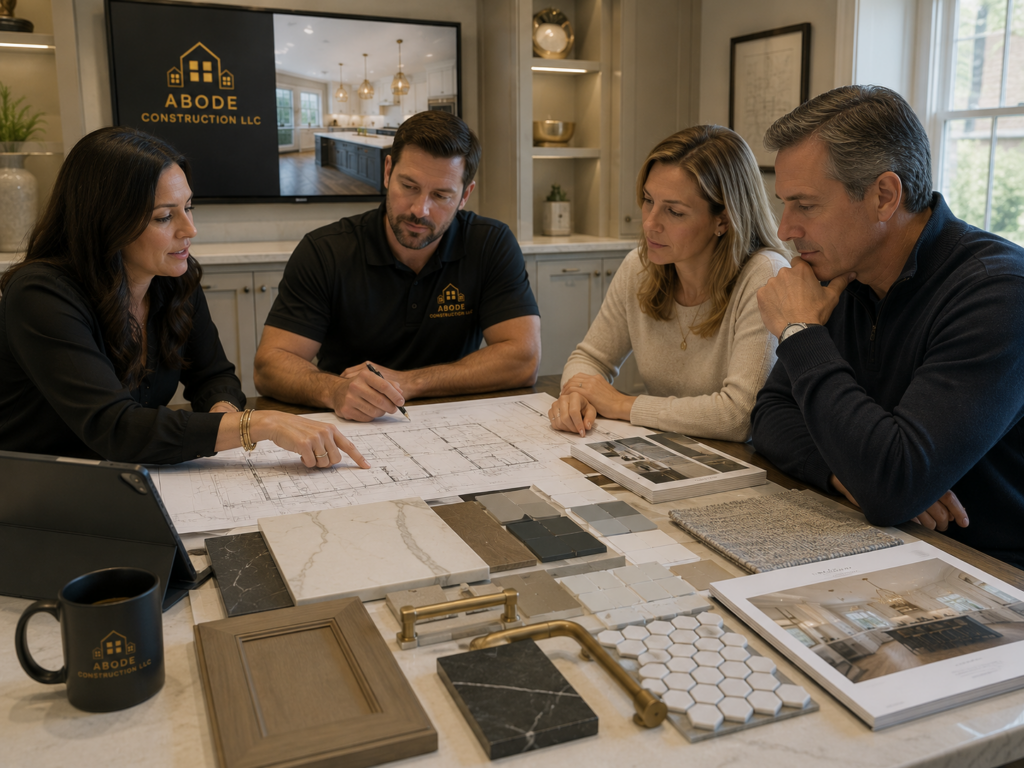
Understanding how the design-build process works for custom homes and renovations helps set realistic expectations before you begin. Here’s how a well-run luxury renovation typically unfolds under this model:
- Initial Discovery and Scope Alignment: The firm meets with you to understand your vision, priorities, and budget range. Unlike a traditional architect meeting, this session includes input from the construction side so scope feasibility is assessed from the start.
- Preconstruction Planning: The team conducts site assessments, reviews existing structural and mechanical conditions, identifies permit requirements, and begins mapping out long-lead material timelines. This phase prevents most of the surprises that disrupt renovations.
- Design Development with Cost Validation: As design concepts take shape, the integrated team validates costs at each decision point. Selections are refined based on both aesthetic fit and budget alignment.
- Permitting and Final Drawings: The team manages permit submissions and coordinates any required inspections or approvals, reducing the administrative burden on the homeowner.
- Construction and Coordination: With a detailed plan in place, construction begins with clear sequencing. Subcontractors are managed by the design-build firm, and changes are handled through a single channel.
- Final Walkthrough and Close-Out: The team conducts a thorough walkthrough, addresses punch list items, and ensures all custom work meets the specifications established in the design phase.
Design-Build vs. Traditional Construction: A Side-by-Side View
| Factor | Traditional Design-Bid-Build | Design-Build |
| Accountability | Split between architect and contractor | Single firm, single contract |
| Budget Control | Design finalized before costs are validated | Costs validated throughout design |
| Timeline | Sequential phases, longer overall duration | Overlapping phases, compressed timeline |
| Communication | Homeowner manages two separate teams | One point of contact for all decisions |
| Mid-Project Changes | Requires renegotiation across contracts | Handled internally by one team |
| Best Suited For | Projects where design is fully defined upfront | Complex, custom, or high-specification projects |
Common Mistakes Homeowners Make When Planning Luxury Renovations
Even well-prepared homeowners run into avoidable problems. Understanding the most common mistakes in the design-build process can save significant time and money.
- Selecting finishes before the budget is confirmed: Falling in love with materials before costs are grounded often leads to painful value-engineering later in the process.
- Underestimating lead times for custom materials: Imported stone, custom cabinetry, and specialty hardware can have lead times of 12 to 20 weeks or more. Projects that don’t account for this early run into construction holds mid-build.
- Treating the preconstruction phase as optional: Skipping thorough pre-build assessments is the single fastest way to encounter expensive surprises once walls are opened.
- Choosing a firm based on price alone: A lower bid that doesn’t reflect the true scope of a luxury project will escalate through change orders. Evaluating experience, process, and portfolio is more reliable than comparing initial numbers.
- Assuming design and construction teams will communicate automatically: In a traditional model, coordination between your architect and contractor requires active management from you unless you have a dedicated project manager bridging the gap.
Change orders are among the leading contributors to luxury renovation cost overruns, with projects that lack integrated design-construction oversight reporting disproportionately higher rates of scope and budget deviation compared to those managed under a single-firm model.
What to Look for When Choosing a Design-Build Firm for a Luxury Renovation
The design-build model works because of the firm executing it. Knowing how to choose the right design-build firm is as important as understanding why the model works in the first place.
| What to Evaluate | Why It Matters for Luxury Projects |
| Portfolio of completed projects | Shows real experience with high-specification finishes and complex scopes |
| In-house vs. subcontracted design team | Determines how tightly integrated the design-construction collaboration actually is |
| Preconstruction process depth | Reflects how well the firm plans before breaking ground |
| Communication structure | Luxury clients expect clear, consistent, and responsive project communication |
| References from comparable projects | Confirms real-world performance at the quality and budget level you’re targeting |
Frequently Asked Questions
How does design-build prevent budget overruns on luxury renovations?
Because the design and construction teams are part of the same firm, cost input happens throughout the design process rather than after drawings are complete. Every material selection, structural modification, and design decision is evaluated against your established budget in real time. This ongoing cost validation reduces the gap between what’s designed and what’s actually affordable, which is where traditional processes most often break down on high-specification projects.
Will I still have control over design decisions and finish selections?
Yes. Design-build doesn’t reduce your design input; it structures it more effectively. You’re still involved in every major selection, from architectural details to finish materials. The difference is that your choices are informed by real cost data at each step, and you have one consistent team guiding you through those decisions rather than navigating between separate firms with different priorities.
Why do design-build projects typically move faster?
Traditional construction requires design to be fully complete before bids go out and work begins. Design-build allows preconstruction activities like structural assessments, permitting, and subcontractor coordination to begin while design is still being refined. This parallel workflow removes the waiting periods between phases and compresses the overall timeline, which on a complex luxury renovation can represent a meaningful reduction in total project duration.
What happens when unexpected conditions are discovered behind the walls?
Older homes and major renovations almost always produce some level of discovery once work begins, whether it’s outdated wiring, plumbing that doesn’t match the plans, or structural conditions that require attention. In a design-build model, the same team that designed the project assesses the discovery, determines the impact, and adjusts the plan without requiring you to coordinate between separate parties. This responsiveness is particularly valuable on luxury projects where custom work can be directly affected by what’s found mid-build.
How do I choose the right design-build firm for my project?
Start with their portfolio. Look for completed projects that match your scope in complexity, finish level, and project type. Ask about their preconstruction process, how they handle change orders, and who your primary point of contact will be throughout the project. References from past clients on comparable renovations are worth requesting. A firm that has built its practice around high-specification residential work will approach your project differently than one that treats luxury renovations as an occasional upsell from standard remodeling.
Homeowner satisfaction surveys in the luxury residential construction segment consistently identify communication quality, budget transparency, and contractor accountability as the top drivers of overall project satisfaction, all of which are structural advantages of the design-build delivery model.
Ready to Start Your Luxury Renovation the Right Way?
A luxury renovation is a significant investment, and how you structure the project from day one shapes everything that follows. Design-build gives you the planning depth, team integration, and accountability that high-specification work requires.
Abode Construction LLC works with homeowners on design-build renovations that demand precision, quality craftsmanship, and a process that keeps the project on track from concept through completion.
To discuss your renovation plans and learn how the design-build process can work for your home, reach out to the team at Abode Construction LLC by calling (301) 412-1715.

Scott Saling is the owner of Abode Construction LLC, a residential contracting and remodeling company based in Gaithersburg, MD. A second-generation contractor and third-generation Marine Corps veteran, he brings military-level planning, discipline, and attention to detail to every project.
With two combat deployments to Iraq, Scott values clear communication above all, believing that keeping homeowners informed at every stage is key to a successful project. His commitment to transparency, craftsmanship, and customer satisfaction drives every renovation his team delivers.