
The cost of hiring a custom home builder in Maryland depends on several interconnected factors: lot location and preparation, square footage, material selections, permit requirements, and builder fees. Maryland homeowners typically spend between $300,000 and $900,000 or more for a fully custom build, with costs varying significantly by county, design complexity, and site conditions.
Building a custom home in Maryland sounds like the ultimate freedom, and it is. But that freedom comes with real financial complexity that surprises many first-time home builders. The state’s geography alone, from the flat coastal plains of the Eastern Shore to the rocky terrain of Frederick and Carroll counties, means that two homes with identical floor plans can carry wildly different price tags before a single wall goes up.
Understanding where the money actually goes gives you leverage. It helps you have informed conversations with builders, avoid costly surprises mid-project, and make design decisions that align with your real budget rather than an optimistic estimate you saw online.
Key Takeaways
- Custom home costs in Maryland range broadly depending on county, lot conditions, and finish level, making early cost planning essential.
- Land acquisition and site preparation are often underestimated and can represent 20–30% of total project cost.
- Builder fees, overhead, and profit margins are legitimate cost components, not negotiating targets to eliminate.
- Permit costs vary by jurisdiction in Maryland and must be factored into your budget from the start.
- A contingency fund of 10–15% is not optional, it is a structural part of any responsible custom build budget.
- The difference between custom and semi-custom building significantly affects cost, timeline, and flexibility.
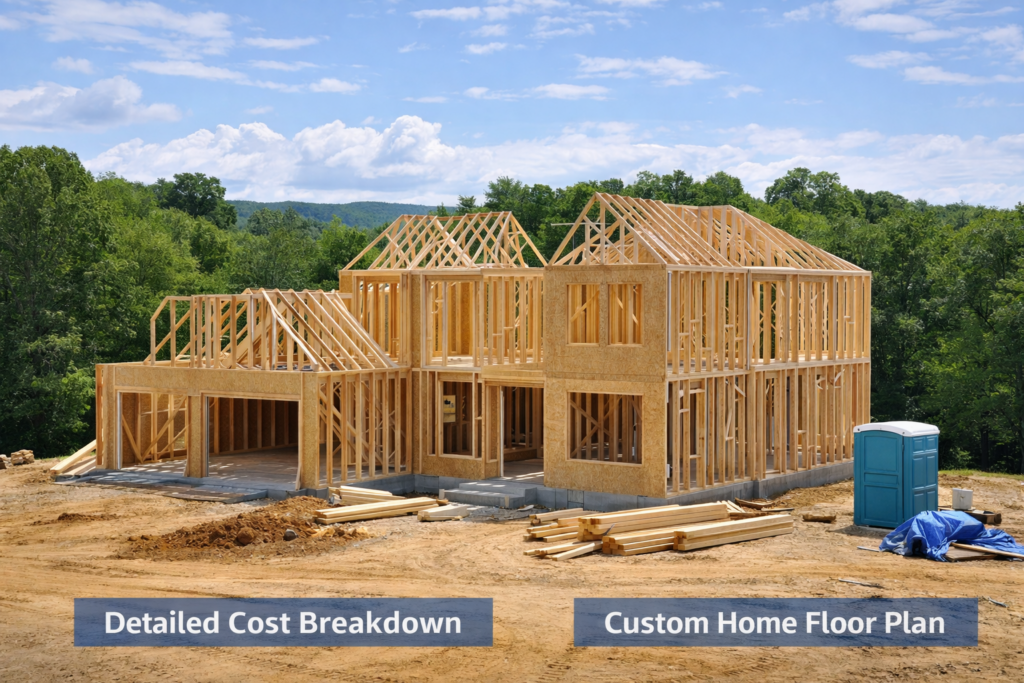
Why Maryland Builds Cost More Than the National Average
Maryland consistently ranks among the more expensive states for residential construction. The reasons are structural, not incidental.
Labor costs in the Baltimore-Washington metropolitan corridor are among the highest in the Mid-Atlantic region. Skilled subcontractors, including electricians, HVAC technicians, and framers, command premium rates in Montgomery, Howard, and Prince George’s counties due to sustained demand from both residential and commercial construction activity.
Maryland’s regulatory environment also adds cost. Many counties require energy efficiency compliance beyond the base International Residential Code, which means additional insulation, window performance ratings, and mechanical system standards that push per-square-foot costs upward.
Then there is land. Buildable lots in desirable Maryland counties have become increasingly scarce, particularly in the I-270 corridor and the suburbs surrounding Annapolis. When you find a suitable lot, you often pay a significant premium for it before the first design conversation happens.
Breaking Down the Major Cost Categories
Land Acquisition and Site Costs
Before a builder can pour a foundation, you need a lot. In Maryland, lot prices vary enormously, from under $100,000 in some rural Western Maryland areas to well over $500,000 in affluent Montgomery County suburbs.
Site preparation, including clearing trees, grading, installing utilities, and managing stormwater runoff, can add anywhere from $15,000 to $80,000 or more to a project. Lots with significant slope, wetland buffers, or existing structures that require demolition sit at the higher end of that range. In counties with strict forest conservation ordinances, like Howard and Montgomery, mitigation costs can be substantial.
One thing many buyers overlook is the cost of connecting to utilities. If your lot requires a private well and septic system rather than municipal connections, budget an additional $20,000 to $50,000 for those systems alone.
Construction Costs Per Square Foot
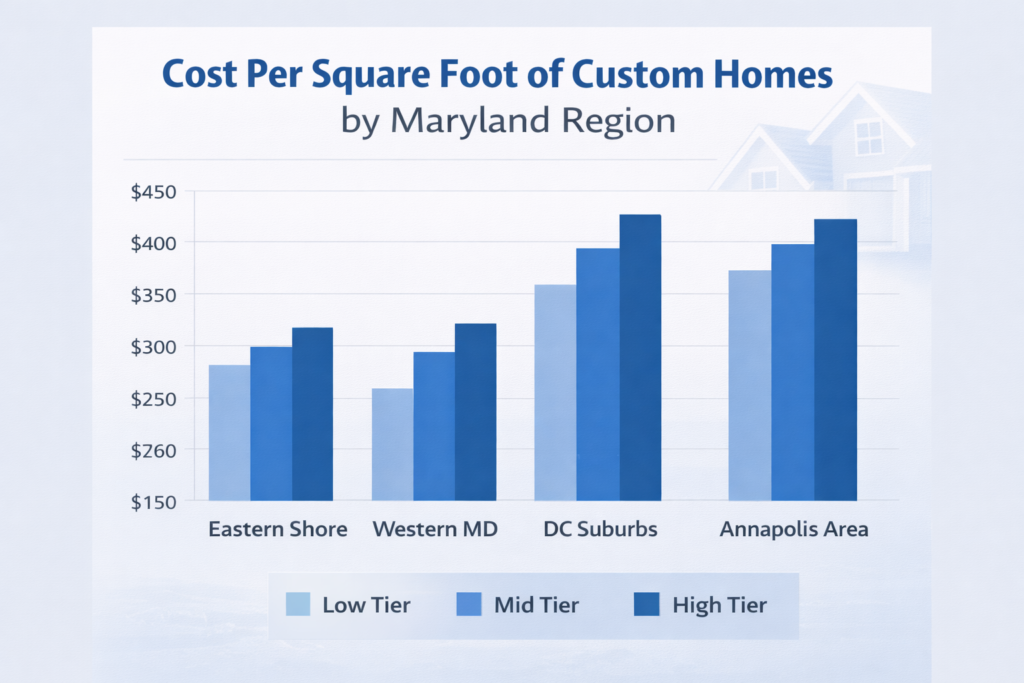
Custom home construction in Maryland typically runs between $175 and $400 per square foot for the structure itself, not including land. A standard-finish custom home in a mid-tier Maryland market might come in around $200 to $250 per square foot, while a high-end build in Montgomery or Anne Arundel County with premium finishes can exceed $350 per square foot. Luxury spec items like custom millwork, imported stone, or smart home integration can push costs beyond $450 per square foot.
Square footage is not a flat multiplier. Kitchens and bathrooms cost significantly more per square foot than bedrooms or living spaces because of their plumbing, cabinetry, and fixture density. A 500-square-foot kitchen addition costs more than a 500-square-foot bedroom, full stop.
Custom Home Build Cost Summary Table
| Cost Category | Typical Range (Maryland) | Notes |
| Land / Lot Purchase | $80,000 – $600,000+ | Varies sharply by county |
| Site Preparation | $15,000 – $80,000 | Grading, utilities, clearing |
| Construction (per sq ft) | $175 – $450+ | Depends on finish level |
| Permits and Fees | $5,000 – $30,000+ | County-dependent |
| Architect / Design Fees | $15,000 – $60,000 | 5–15% of construction cost |
| Builder Fee / Overhead | 15–25% of hard costs | Management, profit, warranty |
| Contingency Fund | 10–15% of total budget | Non-negotiable buffer |
How the Builder Selection Itself Affects Your Cost
The builder you choose is not just a service provider. They are a cost variable. Two builders quoting the same plans in the same Maryland county can come in $50,000 to $150,000 apart, and the cheaper bid is not always the better value.
Experienced custom home builders like Right Custom Home Builder professionals will provide detailed line-item bids that help you understand where money is going. Builders who offer vague lump-sum proposals often hide cost escalation risk inside the contract language.
Ask specifically how allowances are structured. An allowance is a placeholder budget for items not yet selected, like flooring or lighting fixtures. Builders sometimes set unrealistically low allowances to make their bid look competitive, then the actual selections exceed the allowance and the homeowner absorbs the overage. Understanding the full picture of Cost to Build a Custom Home requires reading the fine print on every allowance in the contract.
Step-by-Step: How Custom Home Costs Are Built Up
- Lot selection and due diligence: Before signing on a lot, conduct a survey, perc test (if septic is needed), and environmental assessment. Skipping this step is how buyers end up owning a lot they cannot build on, or one that costs three times more to prepare than anticipated.
- Design and architectural fees: Work with an architect or the builder’s in-house design team to develop plans. Design fees typically run 5–15% of construction costs and include structural engineering, energy modeling, and permit drawings.
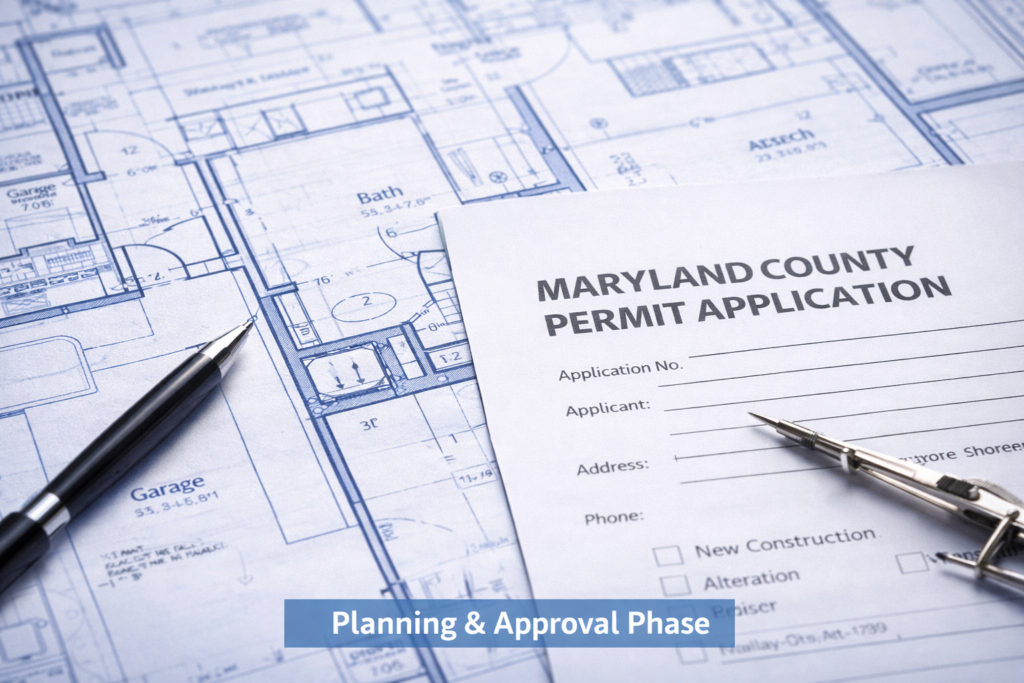
- Permit submissions and approvals: Submit plans to the county building department. In Maryland, this process can take 4–16 weeks depending on jurisdiction and plan complexity. Some counties charge permit fees as a percentage of project value, which adds up fast on a $600,000 build.
- Site preparation and foundation: Clear the lot, grade for drainage, and pour the foundation. This phase surfaces hidden costs like unexpected rock removal or soil remediation that were not visible during the lot purchase.
- Framing, mechanical rough-ins, and enclosure: The structural shell goes up, followed by plumbing, electrical, and HVAC rough-ins. This is where material cost volatility, particularly lumber and copper pricing, can impact the budget.
- Finishes and selections: Flooring, cabinetry, countertops, fixtures, and trim define the visible cost of the home. This phase is where most budget overruns happen because selections evolve as homeowners see options in person.
- Inspections, certificate of occupancy, and final walkthrough: Final inspections by county officials must be passed before occupancy. Address any punch-list items identified during the final builder walkthrough before releasing the final payment.
Permits, Regulations, and Maryland-Specific Requirements
Maryland’s county-level permitting system means costs and timelines differ substantially depending on where you build. Montgomery County has one of the more complex approval processes in the state, with additional requirements around impervious surface limits, forest conservation plans, and traffic impact fees in certain zones.
Building permit fees in Maryland are typically calculated as a percentage of total construction valuation. In some counties, this fee structure means that a $500,000 construction project could trigger permit fees ranging from $5,000 to over $20,000 before accounting for separate electrical, plumbing, and mechanical permits.
Working with a custom home builder Maryland residents trust means hiring someone who already understands local permit offices, inspector relationships, and submission requirements. That familiarity reduces delays and avoids costly resubmission cycles.
Common Mistakes That Inflate Custom Home Costs
- Underestimating site costs: Most buyers focus on the house itself and treat site work as an afterthought. Site prep can easily represent 10–20% of total project cost on a challenging lot.
- Choosing a builder based on the lowest bid: The lowest bid often reflects the lowest quality of subcontractors, the thinnest allowances, or missing scope items. Compare bids line by line, not as totals.
- Skipping pre-construction due diligence: Not having a survey, soil test, or environmental assessment done before purchasing land creates enormous downstream risk.
- Changing plans mid-construction: Every design change after construction starts triggers a change order, which carries not just the material cost but also labor disruption fees, schedule delays, and sometimes permit amendments.
- Setting allowances too low: Low allowances make budgets look manageable on paper. When real selections exceed them, the overage is the homeowner’s problem, not the builder’s.
- Ignoring soft costs: Architectural fees, engineering, surveys, title insurance, construction loan interest, and HOA fees are real costs that can collectively add $40,000 to $100,000 to a project budget.
Comparing Custom vs. Semi-Custom Builds in Maryland
| Factor | Custom Build | Semi-Custom Build |
| Design Flexibility | Unlimited; built from scratch | Modifications to existing plans |
| Average Cost Premium | 20–40% higher than semi-custom | Lower baseline; upgrades add cost |
| Timeline | 14–24 months typical | 10–18 months typical |
| Lot Flexibility | Works on any buildable lot | Often tied to builder’s lots |
| Cost Predictability | More variables; higher risk | More predictable; less exposure |
Areas Served Across Maryland
Custom home building costs and conditions vary across Maryland’s distinct regions. Here is a quick overview of how location shapes the financial picture:
- Montgomery County: High land costs, strict environmental regulations, and premium labor rates make this one of the most expensive jurisdictions in the state.
- Frederick and Carroll Counties: More land availability and lower permit fees than the DC suburbs, though terrain can add site prep costs.
- Howard County: Strong demand for custom homes near Columbia, with forest conservation requirements adding design and mitigation costs.
- Anne Arundel County: Waterfront and near-water lots carry a significant premium, and many sites face critical area or wetland restrictions.
- Eastern Shore (Queen Anne’s, Talbot, Caroline Counties): Lower land costs but septic system requirements are nearly universal, and lot prep in wetland-adjacent areas can be complex.
- Southern Maryland (Charles, St. Mary’s, Calvert Counties): Growing residential markets with more land availability, though infrastructure costs in rural parcels can surprise buyers.
Knowing the questions to ask custom home builder Maryland professionals before signing a contract is one of the most important steps you can take, regardless of which county you are building in.
Frequently Asked Questions
What is the average cost per square foot for a custom home in MD?
Custom homes in Maryland typically range from $175 to $450 per square foot for construction costs, excluding land. The wide range reflects differences in finish level, location, and design complexity. A mid-range custom home in a suburban Maryland county will often fall between $220 and $300 per square foot. High-end builds in Montgomery or Anne Arundel County with luxury finishes regularly exceed $350 per square foot.
Does the builder or the homeowner pay for permits?
In Maryland, permit costs are typically the homeowner’s responsibility, though many builders handle the submission process on the owner’s behalf and include permit fees in the overall project cost estimate. It is important to clarify this in your contract. Some builders include permit fees as a pass-through cost at actual value, while others bundle them into their overhead, which can affect how bids compare across builders.
Why is site preparation a significant cost factor?
Site preparation covers everything needed to make a raw lot buildable: clearing trees, grading the land, managing stormwater, installing a driveway, and connecting utilities. In Maryland, where many desirable lots have slopes, mature trees, or proximity to wetlands or forest conservation areas, these costs escalate quickly. A lot that looks straightforward can require $40,000 to $80,000 in site work once grading, utility connections, and environmental compliance are factored in. Understanding this upfront prevents one of the most common budget shocks in custom home building. You can read more about how these elements affect custom home builder cost Maryland comparisons.
How much should I set aside for a contingency budget?
A contingency fund of 10–15% of your total projected cost is the standard recommendation for custom home builds. On a $600,000 project, that means keeping $60,000 to $90,000 in reserve. This is not pessimism, it reflects the reality that even well-managed custom builds encounter unexpected conditions: rock during excavation, material price increases, or design changes that seem minor but trigger cascading costs. Homeowners who skip the contingency often find themselves making compromises on finishes or finishing work late because they ran out of budget.
What is the difference between custom and semi-custom in terms of cost?
A semi-custom home is built from an existing plan that you modify, while a custom home is designed entirely from scratch around your specific needs and lot. Semi-custom builds generally cost 20–35% less than fully custom homes of similar size because the design work is already done and the builder has experience optimizing the construction process for that plan. The trade-off is flexibility. If your lot has unusual dimensions, specific orientation requirements, or you want a truly unique layout, a semi-custom plan may not accommodate those needs without significant modification costs that erode the savings.
Final Thoughts on Budgeting for a Custom Home in Maryland
Custom home building in Maryland is one of the most significant financial commitments most families will ever make. The costs are real, the variables are numerous, and the difference between a smooth project and a stressful one often comes down to preparation and the builder you choose.
The homeowners who navigate this process most successfully are the ones who understand cost structure before they start, not after they have already committed to a lot and a contract. They ask hard questions about allowances, they hold a real contingency fund, and they work with builders who communicate transparently rather than quote attractively.
If you are planning a custom home build in Maryland and want a clear-eyed conversation about what your project will actually cost, Abode Construction is ready to walk you through it. The team brings deep Maryland-specific experience across counties and project types, and the conversation starts with honesty about numbers, not a sales pitch.
Call (301) 412-1715 to schedule a consultation and get a realistic picture of what your custom home build will require from start to finish.

Scott Saling is the owner of Abode Construction LLC, a residential contracting and remodeling company based in Gaithersburg, MD. A second-generation contractor and third-generation Marine Corps veteran, he brings military-level planning, discipline, and attention to detail to every project.
With two combat deployments to Iraq, Scott values clear communication above all, believing that keeping homeowners informed at every stage is key to a successful project. His commitment to transparency, craftsmanship, and customer satisfaction drives every renovation his team delivers.