
Modernizing an older luxury home without erasing its original character requires a deliberate balance of restoration and thoughtful upgrades. The goal is to enhance livability, efficiency, and aesthetics while respecting the architectural details, materials, and proportions that make the home distinctive. With the right planning and the right contractor, you can achieve both without compromise.
Older luxury homes in Maryland carry something newer builds rarely can replicate: genuine character. Crown moldings, wide-plank hardwood floors, original millwork, and hand-crafted details tell a story. But aging systems, outdated layouts, and inefficient kitchens can make daily living frustrating. The challenge isn’t choosing between modern comfort and historic charm. It’s knowing how to bring them together.
Key Takeaways
- Start with a preservation-first mindset: identify what should be restored versus replaced before any work begins.
- Systems upgrades (HVAC, electrical, plumbing) can be modernized without touching visible architectural features.
- Material selection matters more in historic renovations than in new construction; mismatched finishes break visual continuity.
- Smart home technology can be integrated discreetly without altering original design elements.
- Partnering with a contractor experienced in both luxury finishes and historic preservation dramatically reduces costly mistakes.
- In Maryland, certain homes may be subject to local historic district guidelines, which should be reviewed before any exterior work.
Things You Must Know
1. Not Everything Old Needs to Be Replaced
One of the most common and costly mistakes homeowners make is assuming that modernization means replacement. Original plaster walls, vintage hardware, and period-appropriate millwork are often worth restoring rather than discarding. Skilled craftspeople can repair and refinish these elements to look impeccable while preserving the authentic detail that gives the home its value and personality. Before approving any demolition scope, ask your contractor which elements can be saved.
2. Systems Upgrades Are Where Modern Comfort Comes From
The real quality-of-life improvements in an older luxury home come from behind the walls. Updating HVAC to a zoned system, replacing aging electrical panels, improving insulation, and upgrading plumbing infrastructure makes an enormous difference in comfort, energy efficiency, and safety. These upgrades rarely affect the visible character of the home when planned carefully. This is where the bulk of the investment often goes, and where it delivers the most lasting return.
3. Maryland’s Historic Districts Have Real Implications
If your home sits within a designated historic district in Maryland, exterior modifications may require approval from a local Historic Preservation Commission. This applies to window replacements, roofing materials, additions, and sometimes even paint colors on contributing structures. Interior work is typically not regulated, but it’s worth verifying before committing to any plans. A contractor familiar with Maryland’s preservation landscape can help you navigate this process without delays.

What Does “Preserving Original Character” Actually Mean?
It means understanding what makes the home architecturally significant before picking up a demolition tool. Character in an older luxury home typically lives in its proportions, its craftsmanship, and its materials. The ceiling height of a Victorian parlor. The arch of a craftsman doorway. The book-matched marble of a 1920s fireplace surround. These aren’t just aesthetic details; they’re structural to the home’s identity.
Preservation doesn’t mean freezing the home in time. It means treating these original elements as the design framework everything new must work with, not against. A well-executed renovation makes it genuinely difficult to tell where the original ends and the modern begins.
For homeowners in Maryland considering a full renovation, exploring how to plan a luxury home renovation in Maryland is a practical first step before setting any budget or scope.
Where Should You Start When Modernizing an Older Luxury Home?
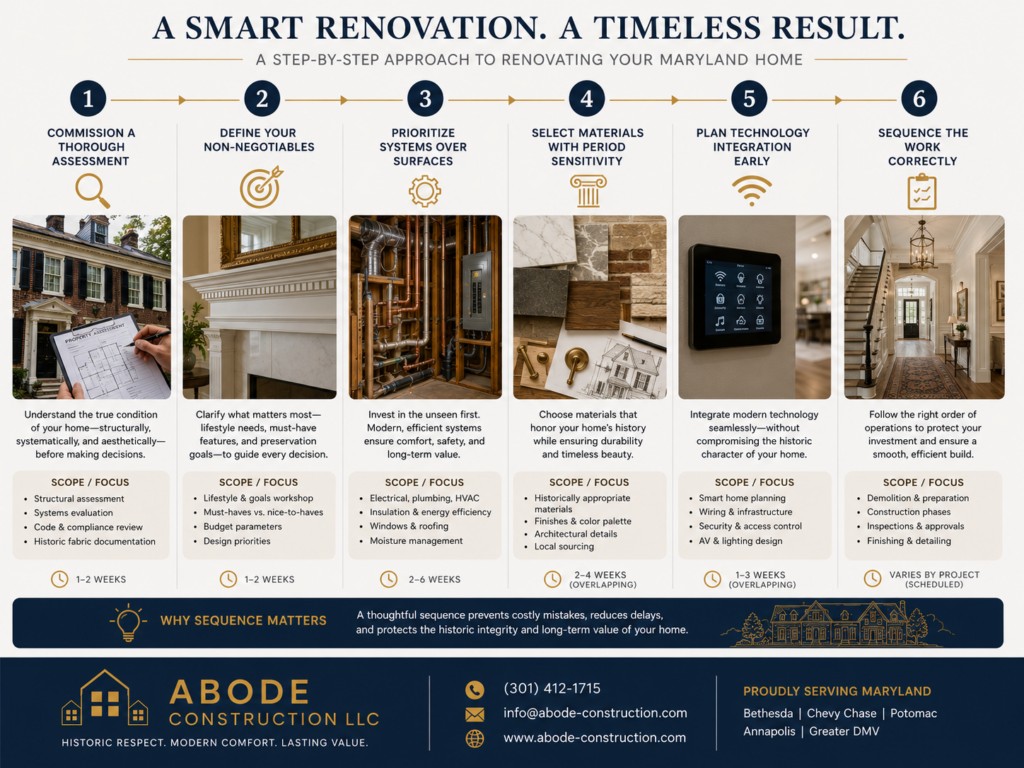
- Commission a thorough assessment. Before any design decisions, have a qualified contractor and, if applicable, a preservation specialist walk through the home. Document original features, identify structural concerns, and flag anything that requires remediation (lead paint, asbestos, outdated wiring) before cosmetic work begins.
- Define your non-negotiables. Decide which original features are protected by your own vision. This list becomes the design boundary every other decision works around.
- Prioritize systems over surfaces. Modernize mechanical, electrical, and plumbing systems before addressing finishes. Doing it in the wrong order forces you to tear apart finished work later.
- Select materials with period sensitivity. Choose modern finishes that respect the home’s era in color palette, texture, and scale. A sleek minimalist kitchen can look jarring inside a 1910 Colonial Revival. Transitional designs tend to bridge the gap more successfully.
- Plan technology integration early. Wiring for smart systems, in-wall speakers, security cameras, and EV charging needs to be roughed in during the mechanical phase, not retrofitted after walls are closed.
- Sequence the work correctly. Structural and systems work first, then insulation, drywall, and plaster restoration, then finishes, then fixtures and furnishings. Out-of-sequence work is the leading cause of budget overruns in complex renovations.
Which Original Features Are Worth Restoring vs. Replacing?
| Feature | Restore or Preserve | Replace or Upgrade |
| Original hardwood floors | Restore and refinish when structurally sound | Replace only if damaged beyond repair |
| Crown molding and millwork | Repair and repaint; match profiles if extending | Only if completely deteriorated |
| Original windows | Restore if in a historic district; add interior storms | Replace with period-appropriate profiles when efficiency is critical |
| Plaster walls and ceilings | Repair cracks; preserve where intact | Replace severely damaged sections with matching texture |
| Period hardware (knobs, hinges) | Clean and restore original pieces | Source period-accurate reproductions if missing |
| HVAC, electrical, plumbing | Rarely worth keeping in older homes | Upgrade to modern systems; conceal carefully |
How Do You Modernize the Kitchen Without Losing the Home’s Soul?
The kitchen is usually where the tension between modern function and historic character runs highest. Professional-grade appliances, large islands, and open layouts are today’s expectations, but they can feel completely out of place inside a home built in 1905.
The solution is to work with the home’s geometry rather than fighting it. If the original kitchen had two separate rooms, consider combining them while retaining a visual boundary, such as a change in ceiling height or a half-wall, that echoes the original layout logic. Cabinet profiles in inset, beaded-inset, or raised-panel styles read more naturally in period homes than flat-slab contemporary cabinetry. Stone countertops, unlacquered brass hardware, and integrated appliance panels can make a fully modern kitchen feel like it always belonged there.
Kitchen renovations consistently rank among the highest-return projects in luxury home renovation, with well-executed remodels in historic properties often recovering a significant portion of the project cost in appraised home value, particularly in desirable Maryland markets.
Common Mistakes to Avoid When Renovating an Older Luxury Home
- Choosing modern fixtures that clash with the home’s era. Matte black plumbing fixtures look sharp in contemporary homes but can feel anachronistic inside a Federal-style townhouse. Period-transitional finishes, like brushed nickel or aged brass, tend to bridge styles more gracefully.
- Skipping a pre-renovation hazmat assessment. Homes built before 1978 may contain lead paint or asbestos. In Maryland, disturbing these materials without proper remediation protocols creates both a health risk and a legal liability.
- Adding additions that ignore the original massing. A rear addition that doesn’t match the home’s proportions, roofline, or material palette undermines the architectural integrity even when it’s done with expensive finishes.
- Underestimating the complexity of mechanical upgrades. Running new ductwork, electrical, or plumbing through a home with plaster walls and complex framing takes significantly more time and skill than the same work in a newer build. Budget and timeline assumptions from standard renovation guides rarely apply.
- Hiring a contractor without experience in historic or high-end renovation work. Older luxury homes require craftspeople who understand both period construction methods and modern performance standards. The gap in outcome between the right contractor and the wrong one is significant.
Understanding what to expect from a full-service luxury renovation contractor before you start interviewing can help you ask the right questions and recognize who actually has the right experience.
How Does the Design-Build Approach Help With This Type of Renovation?
When modernizing a historic or older luxury home, the design and construction phases are deeply interdependent. A wall you plan to open may reveal original structural framing that changes the design. A ceiling you plan to restore may hide ductwork that needs to be rerouted before any finish work can proceed. When your architect and your contractor are working as separate teams, these discoveries create delays, scope disputes, and budget conflicts.
Projects managed under an integrated design-build model tend to experience fewer change orders and shorter overall timelines compared to traditionally separated design-bid-build processes, particularly on complex renovation scopes in older structures.
A design-build model keeps design intent and field reality in constant communication. Learn more about why design-build tends to work better for luxury home renovations and what it means for how your project is managed day to day.
Modernization Scope vs. Estimated Impact
| Scope of Work | Character Impact | Livability Impact | Complexity Level |
| HVAC system replacement | Low (hidden) | Very High | High |
| Kitchen renovation | High if done poorly; low if done well | Very High | Very High |
| Window restoration or replacement | High | High (efficiency, light) | Moderate to High |
| Smart home integration | Low if planned early | Moderate to High | Moderate |
| Bathroom renovation | Moderate (original tile often preserved) | High | High |
| Millwork and plaster restoration | Very High | Low (aesthetic only) | High (skilled labor required) |
In established Maryland neighborhoods with a high concentration of pre-1950 homes, properties with professionally restored original architectural details have historically commanded price premiums over comparably sized renovated homes where original character was removed during modernization.
For homeowners ready to take a structured approach, reviewing guidance on luxury home renovations can clarify the full scope of what professional renovation services cover and how projects are typically scoped and phased.
Frequently Asked Questions
How do I make my dated, older kitchen feel modern while keeping its historic soul?
The key is updating function and efficiency while matching the visual language of the original home. Inset cabinetry, furniture-style islands, period-appropriate hardware, and integrated appliance panels allow for a fully professional-grade kitchen that reads as historically compatible. Avoid flat-slab contemporary cabinetry, industrial finishes, or exposed hardware that would have been visually foreign when the home was built. The goal is for the kitchen to look like the original owners would have had it, if they’d had access to today’s appliances.
Can I make bathrooms luxurious without ripping out the vintage tile?
Often, yes. Original subway tile, hexagonal mosaic floors, and period-appropriate fixtures are genuinely valuable and worth preserving where possible. If the tile is sound but grout has deteriorated, professional re-grouting and sealing can restore the look completely. You can layer in modern luxury through updated lighting, custom vanities in period-compatible profiles, heated floors (installed beneath, without disturbing original tile), and high-end plumbing fixtures in finishes that complement the originals. Ripping out original tile to install something generic almost always reduces the home’s character and resale appeal.
How do I select paint colors that modernize the space without erasing its history?
Work with the undertones of your existing materials. The wood tones in original floors and millwork, the color temperature of the stone, and the light quality in each room all inform which palette will feel harmonious versus forced. Historic preservation paint lines from major manufacturers offer period-appropriate palettes that also perform well with contemporary lighting. Avoid ultra-cool grays or pure white in homes with warm-toned original materials, as the contrast tends to make the original elements look tired rather than elevated.
How can I improve natural light without compromising the historic exterior?
Interior modifications offer the most flexibility. Removing non-structural walls between rooms, replacing heavy interior doors with glass-panel alternatives, and adding interior transoms above doorways all increase light flow without touching the exterior. If window replacement is necessary, many manufacturers offer true-divided-light or simulated-divided-light windows that match original profiles closely enough to satisfy most historic preservation guidelines. Solar tubes can also bring daylight into interior spaces like hallways and bathrooms without altering any exterior elevation.
Where should I hide smart home technology and modern electronics?
Planning is everything here, and it needs to happen before walls close. Structured wiring closets, in-wall speaker systems, and flush-mounted control panels can all be integrated cleanly when they’re part of the original rough-in plan. For existing finished spaces, wireless systems have improved significantly and can reduce the need for new wire runs. Thermostats, lighting controls, and security panels should be placed in architecturally neutral locations and selected in finishes that are as unobtrusive as possible. Avoid mounting modern technology directly on original millwork or in visually prominent positions without carefully considering the visual impact.
Ready to Modernize Your Home Without Losing What Makes It Special?
Older luxury homes in Maryland represent some of the most architecturally significant residential properties in the region. Getting the renovation right requires more than good taste; it takes the right expertise, a preservation-first approach, and a team that understands both historic construction and modern performance standards.
Abode Construction LLC works with homeowners across Maryland on exactly these kinds of projects: homes where the history matters as much as the outcome. If you’re planning a renovation and want guidance on how to approach it correctly from the start, reach out to the team at (301) 412-1715 for a consultation.
Maryland is home to a significant number of pre-1940 residential structures, many of which sit within locally or nationally designated historic districts, creating a consistent and growing demand for renovation contractors with documented expertise in preservation-compatible modernization.
Every renovation starts with a conversation. The more clearly you understand your goals, your home’s constraints, and what a realistic scope looks like, the better your outcome will be. Abode Construction LLC brings the experience to help you make those decisions with confidence.

Scott Saling is the owner of Abode Construction LLC, a residential contracting and remodeling company based in Gaithersburg, MD. A second-generation contractor and third-generation Marine Corps veteran, he brings military-level planning, discipline, and attention to detail to every project.
With two combat deployments to Iraq, Scott values clear communication above all, believing that keeping homeowners informed at every stage is key to a successful project. His commitment to transparency, craftsmanship, and customer satisfaction drives every renovation his team delivers.