
A spa-like primary suite bathroom combines high-end materials, thoughtful layout planning, and custom fixtures to create a space that feels both functional and indulgent. For homeowners in Maryland and the Washington, DC Metro area, achieving this level of finish requires more than picking finishes — it takes coordinated design, structural planning, and precision execution from a team that understands luxury residential construction.
Most primary bathrooms are underutilized spaces. They function, but they don’t feel like an escape. With the right renovation approach, a primary suite bathroom can become one of the most valuable and enjoyable rooms in your home — a private retreat designed around how you actually want to live.
Key Takeaways
- Spa-like bathrooms prioritize layout and flow first — materials and fixtures come second.
- Freestanding soaking tubs, curbless showers, and heated floors are among the most sought-after luxury upgrades in 2025 and 2026.
- Lighting design is one of the most overlooked elements in bathroom renovations, yet it dramatically affects the overall feel of the space.
- A luxury bathroom renovation in Maryland typically involves permitting, plumbing relocation, and structural considerations that require professional coordination.
- Integrating bathroom work into a larger whole-home renovation or design-build project often delivers better results and greater efficiency than treating it as a standalone job.
- Veteran-led design-build firms like Abode Construction manage architecture, engineering, and construction under one roof, reducing delays and miscommunication.
Things You Must Know
1. Layout Changes Drive Most of the Cost
Moving a toilet, relocating plumbing supply lines, or expanding the footprint of the bathroom into adjacent square footage are the decisions that most significantly affect budget and timeline. Cosmetic upgrades like tile, fixtures, and vanities are far more predictable. Before finalizing any design, understanding what’s behind the walls and beneath the floor is essential — and that requires professional assessment, not assumptions based on what the space looks like from the surface.
2. “Spa-Like” Is a Design Philosophy, Not Just a Product List
Homeowners often focus on specific features like a rainfall showerhead or a freestanding tub, but the spa experience actually comes from how those elements work together spatially and sensory. Proportion, lighting temperature, acoustic design, ventilation, and material cohesion all contribute to how the room feels. A skilled interior designer working alongside your contractor — not brought in after the fact — makes a measurable difference in the end result.
3. Permits Are Not Optional for Luxury Bathroom Renovations
In Montgomery County, Prince George’s County, and Washington, DC, significant bathroom renovations involving plumbing relocation, electrical upgrades, or structural changes require permits. Skipping this step creates liability issues during resale and can force costly remediation later. Working with a design-build firm that handles permitting in-house eliminates this risk entirely and keeps the project moving on a predictable schedule.
What Makes a Bathroom Feel Like a Spa?
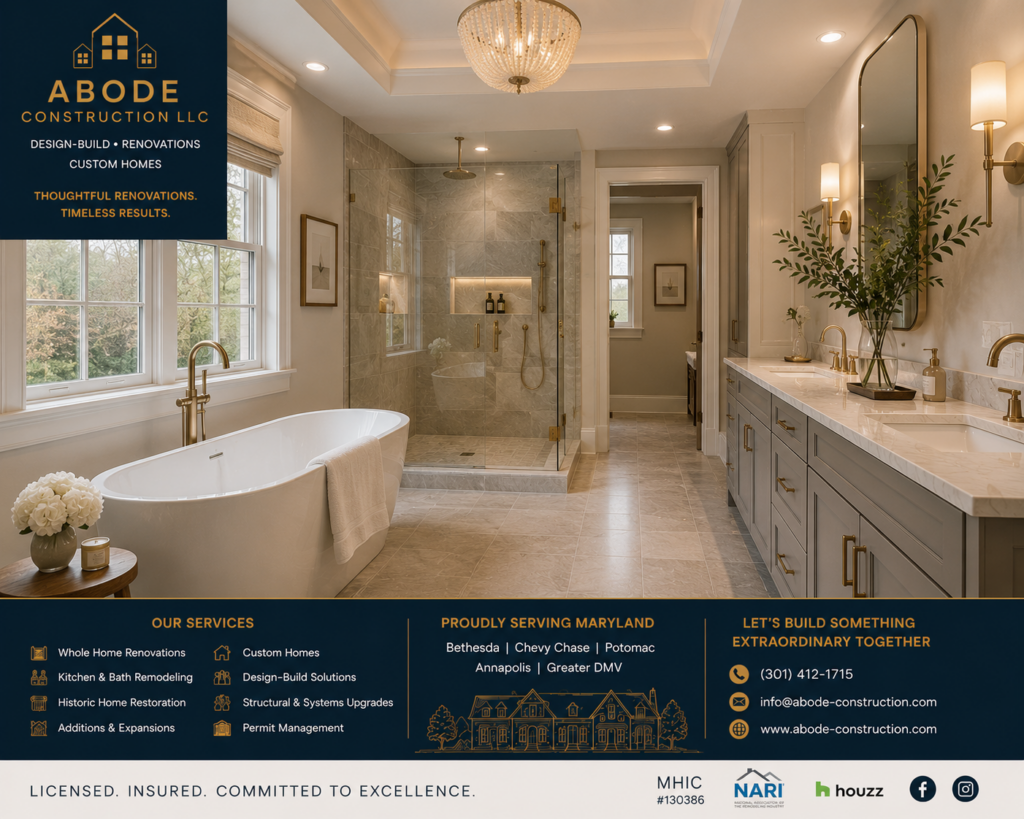
The difference between a standard primary bathroom and a true spa-like retreat isn’t just price point. It comes down to intentional design choices that engage the senses and remove friction from the daily experience.
Spa environments are defined by warmth, quiet, natural materials, and a sense of spaciousness even when square footage is limited. Replicating that at home means thinking about the room from the user’s perspective — what they see when they walk in, how the temperature feels underfoot, how light behaves at different times of day, and whether the layout encourages relaxation or creates visual clutter.
The Most Impactful Luxury Bathroom Upgrades
Walk-In Showers with Curbless Entry
Curbless or zero-threshold showers are one of the most requested features in luxury primary suite renovations. They create a seamless visual flow between the shower and the rest of the bathroom, and they eliminate the physical barrier that makes standard shower pans feel dated. Large-format tiles, linear drains, and frameless glass enclosures amplify the effect.
For a true spa experience, multi-function shower systems with body jets, a ceiling-mounted rainfall head, and a handheld wand give the shower functional range that a single fixed head simply can’t match.
Freestanding Soaking Tubs
A well-positioned freestanding soaking tub becomes a visual anchor for the entire bathroom. Oval and vessel styles in matte stone resin or cast iron are particularly popular in Maryland luxury homes right now, and they pair naturally with wall-mounted tub fillers in brushed gold, polished chrome, or unlacquered brass.
Placement matters as much as the tub itself. Positioning it near a window with natural light or against a feature wall creates the kind of considered composition that separates a luxury renovation from a standard remodel.
Heated Floors and Radiant Systems
Radiant floor heating is consistently ranked among the top luxury bathroom features by homeowners who have undergone high-end renovations, with many citing it as the single upgrade they would never give up. In the Mid-Atlantic climate, where winters bring genuine cold, stepping onto a warm tile floor transforms the morning routine in a way that’s difficult to overstate.
Electric radiant systems are typically installed directly beneath tile and are controlled by programmable thermostats. The installation window is during the renovation itself — adding radiant heat after tile is set requires a full floor demo, which is why it’s worth planning ahead.
Custom Vanities and Storage Design
Built-in cabinetry designed specifically for the space eliminates the visual noise of freestanding furniture and maximizes every square inch. Floating vanities with integrated lighting underneath add depth and a modern edge. For larger primary suites, dual vanity configurations — each customized for the individual user — are a practical upgrade that adds real daily value.
Lighting as a Design System
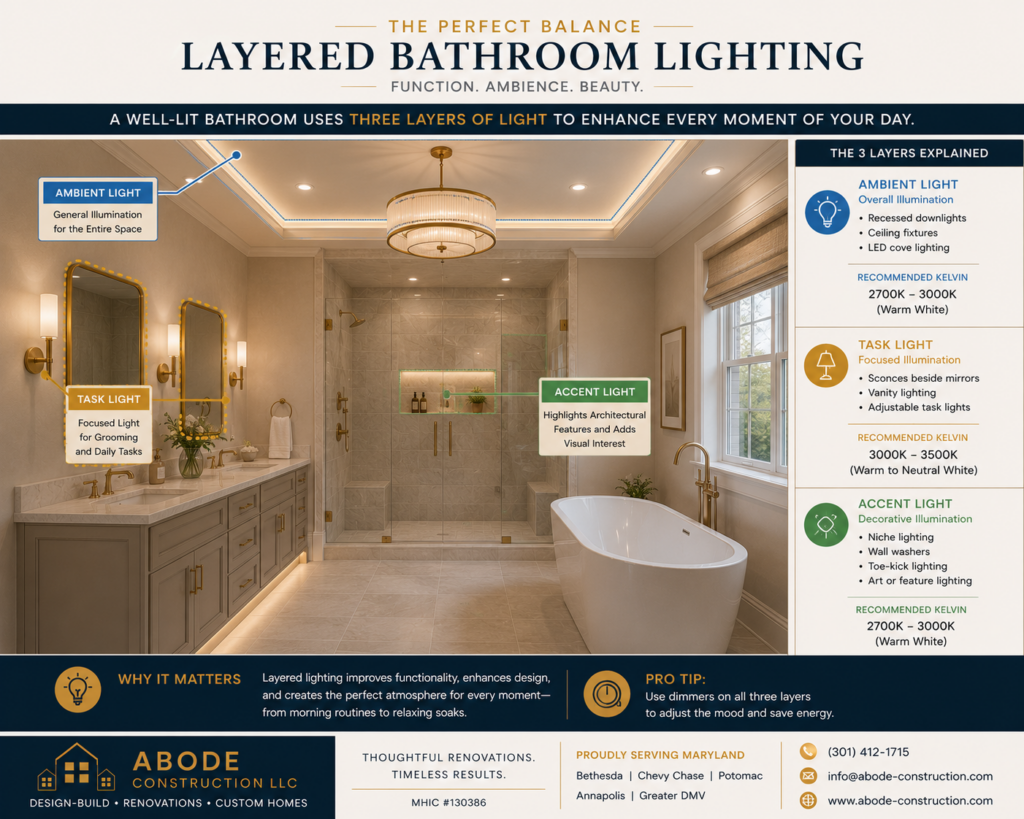
Lighting in a spa-quality bathroom operates in layers. Task lighting at the vanity needs to be even and shadow-free. Ambient lighting should be dimmable to allow the room to shift from functional morning space to relaxing evening retreat. Accent lighting can highlight architectural features or material choices like book-matched stone slabs or specialty tile work.
Warm LED temperatures in the 2700K to 3000K range are generally preferred for spa environments. Integrating lighting control into a broader smart home system adds convenience without complicating the design.
Material Choices That Define Luxury
| Material | Best Used For | Key Consideration |
| Marble (Calacatta, Statuario) | Feature walls, tub surrounds, flooring | Requires sealing; avoid high-acid cleaners |
| Porcelain (large-format) | Shower walls, floors, continuity across spaces | Low maintenance; wide range of stone looks |
| Quartzite | Vanity tops, shower benches | Harder than marble; still requires sealing |
| Teak / Waterproof Wood-Look | Accent walls, shower floors, spa benches | Warmth and texture; confirm moisture rating |
| Venetian Plaster | Accent walls, non-shower surfaces | Artisan application; high visual impact |
How Does the Renovation Process Actually Work?
A luxury primary bathroom renovation isn’t a weekend project, and the homeowners who are happiest with their results are those who understood the process before it began. For those considering working with a full-service luxury renovation contractor, here’s what the process typically involves.
- Design consultation and space assessment: Understanding the existing layout, structural conditions, plumbing configuration, and the homeowner’s goals before any decisions are finalized.
- Design development: Interior design selections, fixture specification, material choices, and 3D renderings to confirm the vision before construction begins.
- Engineering and permitting: Structural, plumbing, and electrical engineering as required; permit applications filed with the relevant jurisdiction.
- Demolition and rough work: Removal of existing finishes, relocation of plumbing and electrical as needed, framing adjustments for new layout.
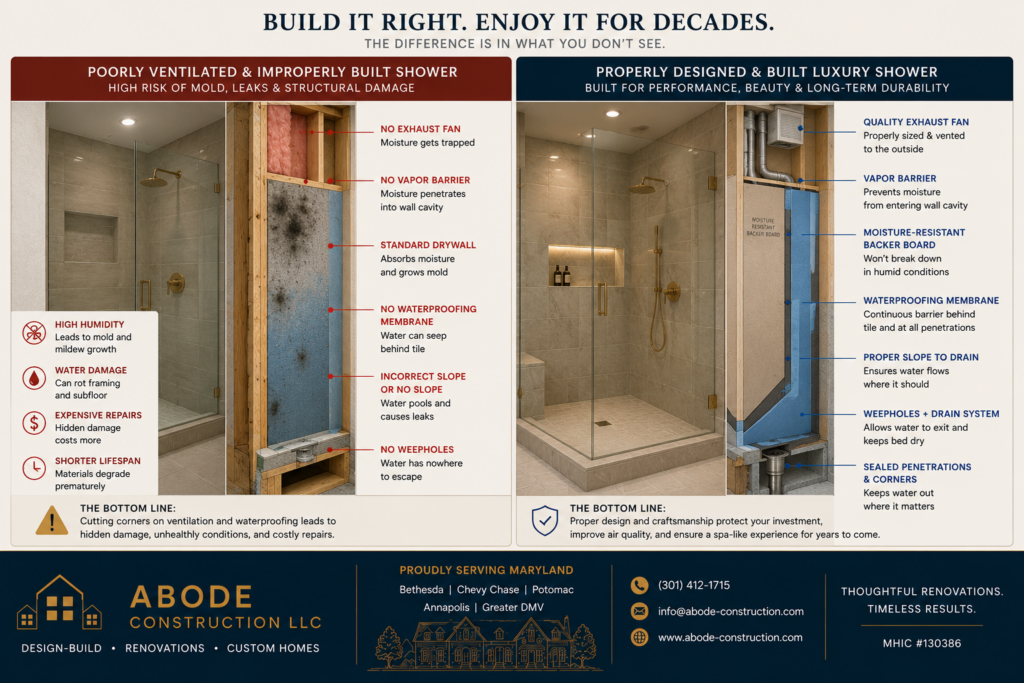
- Waterproofing and substrate preparation: Critical phase often skipped by lower-quality contractors; proper waterproofing prevents long-term moisture damage behind walls and under floors.
- Tile and stone installation: Large-format tile, feature walls, shower systems, and floor work installed in sequence.
- Fixture and finish installation: Vanities, plumbing fixtures, glass enclosures, lighting, mirrors, and hardware.
- Final inspection and punch list: Walk-through with the client to confirm every detail meets expectations before project closeout.
Understanding how to plan a luxury home renovation in Maryland without overcomplicating the process can save significant time and reduce stress before a single wall comes down.
What Do Luxury Bathroom Renovations Cost in Maryland?
Luxury primary bathroom renovations in the Maryland and DC Metro market typically range from $50,000 to well over $150,000 depending on scope, square footage, material selections, and whether structural or plumbing changes are involved. Projects in Potomac, Bethesda, and Chevy Chase often skew toward the higher end of that range given property values and finish expectations in those neighborhoods.
| Scope Level | What It Typically Includes | General Investment Range |
| Refresh / Cosmetic | New fixtures, tile overlay, vanity swap | $15,000 – $35,000 |
| Mid-Level Luxury | Custom tile, new plumbing fixtures, shower upgrade | $40,000 – $80,000 |
| Full Luxury Renovation | Layout change, custom vanity, freestanding tub, radiant floors, stone surfaces | $80,000 – $150,000+ |
Ranges are general estimates for planning purposes. Actual project costs depend on scope, existing conditions, material selections, and site-specific factors. A professional assessment will provide accurate figures for your specific project.
Common Mistakes to Avoid in a Luxury Bathroom Renovation
- Starting with fixtures before confirming the layout. Purchasing a soaking tub before the plumber has assessed rough-in locations leads to costly adjustments or compromised placement.
- Underinvesting in waterproofing. Surface materials get all the attention, but waterproofing behind walls and beneath floors is what prevents a $100,000 renovation from developing mold or structural damage within five years.
- Hiring separate trades without a coordinator. When a tile contractor, plumber, electrician, and designer are all working independently, gaps in communication create sequencing errors that delay projects and inflate costs. These are among the most common mistakes homeowners make during the design-build process.
- Choosing trendy finishes without considering longevity. Ultra-trendy colors and hardware finishes can date a space quickly. A skilled designer will guide you toward selections that feel current now and remain appealing over time.
- Ignoring ventilation. High-end bathrooms require high-capacity ventilation fans, especially in steam showers. Undersized ventilation is one of the leading causes of long-term moisture problems in renovated bathrooms.
- Skipping the permit process. As noted above, unpermitted work creates resale liability and can require full demolition to remediate if discovered during inspection.
Why Maryland and DC Homeowners Are Investing in Primary Suite Renovations
Bathroom renovations consistently rank among the top return-on-investment home improvement projects in the Mid-Atlantic real estate market. In high-demand areas like Bethesda, Potomac, Rockville, and Chevy Chase, a well-executed primary suite renovation can meaningfully differentiate a home in a competitive market and support a stronger asking price.
Beyond resale value, there’s a more immediate reason: homeowners in this area tend to stay in their properties for longer periods and want to enjoy them. A primary suite that functions as a genuine retreat rather than just a utility space improves daily quality of life in ways that are hard to put a number on.
Industry data suggests that luxury bathroom renovations in the $50,000-and-above range recoup a significant portion of their cost at resale when executed with quality materials and proper permitting — particularly in premium zip codes within Montgomery County and Washington, DC.
Frequently Asked Questions
How do I make my bathroom more like a spa?
Start with the sensory elements: lighting temperature, surface warmth (radiant floor heating), and acoustics (proper ventilation and sound insulation). From there, focus on reducing visual clutter through integrated storage, choosing natural materials like stone and wood, and selecting fixtures that feel substantial rather than standard. A spa-like bathroom is less about any single feature and more about how all the elements work together to create calm and comfort.
What are the most regretted bathroom upgrades?
Trendy finishes that date quickly, soaking tubs that look beautiful but rarely get used, and under-sized showers are among the most commonly cited regrets in renovated bathrooms. Homeowners also frequently regret not investing in better lighting or adequate ventilation. The upgrades people rarely regret are radiant floors, quality shower systems, custom storage, and durable natural stone surfaces.
What are the luxury master bathroom trends for 2026?
In 2026, the dominant directions in luxury primary bathrooms include warmer material palettes (travertine, limewash, warm-toned wood accents), minimalist steam showers with integrated seating, bespoke vanity cabinetry that reads more like fine furniture, and smart home integration for lighting and climate control. There’s also a clear shift toward biophilic elements: natural light maximization, organic textures, and greenery incorporated into the design intentionally rather than as an afterthought.
What does a $10,000 bathroom remodel look like?
At $10,000, a bathroom remodel is primarily cosmetic: new vanity and fixtures, updated lighting, fresh tile in a limited area, and possibly a new mirror or accessories. Structural changes, plumbing relocation, or full tile replacement are generally not feasible at this budget level in the Maryland and DC market. For homeowners considering a true luxury renovation, projects of this type typically start well above that figure, which is why a realistic budget conversation early in the process is essential.
What’s the most expensive part of a bathroom remodel?
Labor and plumbing changes typically drive the highest costs in a bathroom renovation. Moving supply or drain lines, especially in older Maryland homes with cast iron or galvanized plumbing, requires skilled trades work and can add significantly to the overall budget. Custom tilework, particularly large-format stone or complex patterns, is also a major cost driver. Material choices like natural marble or quartzite can add tens of thousands of dollars depending on the square footage involved.
Ready to Transform Your Primary Suite?
A spa-like primary bathroom is one of the most personal investments you can make in your home. It requires the right design sensibility, the right materials, and — critically — the right team to execute it without the coordination failures that plague projects managed across multiple independent contractors.
Abode Construction is a veteran-owned luxury design-build firm serving Maryland and the Washington, DC Metro area. The team brings architecture, engineering, interior design, permitting, and construction under one roof, so your project moves from concept to completion with military-grade accountability and precision. Whether your primary suite renovation is a standalone project or part of a larger whole-home transformation, Abode provides the structured, transparent process that high-value projects deserve.
To start the conversation about your primary suite renovation, contact Abode Construction at (301) 412-1715. Serving Bethesda, Potomac, Rockville, Chevy Chase, Gaithersburg, Silver Spring, and communities throughout Montgomery County and the greater DC Metro area.

Scott Saling is the owner of Abode Construction LLC, a residential contracting and remodeling company based in Gaithersburg, MD. A second-generation contractor and third-generation Marine Corps veteran, he brings military-level planning, discipline, and attention to detail to every project.
With two combat deployments to Iraq, Scott values clear communication above all, believing that keeping homeowners informed at every stage is key to a successful project. His commitment to transparency, craftsmanship, and customer satisfaction drives every renovation his team delivers.