
A luxury kitchen renovation goes far beyond cosmetic updates. For homeowners in Maryland and the Washington, DC Metro area, it means integrating premium materials, smart layouts, and intentional design choices that improve how the space functions day to day while reflecting the quality of the home around it. When done correctly, it becomes one of the highest-returning investments a homeowner can make.
The kitchen is where daily life actually happens. It is where families gather, where meals are prepared for guests, and where the character of a home makes itself known in practical, tangible ways. For homeowners with older estates, growing families, or homes that simply no longer match their lifestyle, a thoughtful luxury kitchen renovation can change how the entire house feels, not just one room.
Key Takeaways
- Luxury kitchen renovations prioritize function as much as aesthetics, with layouts, storage systems, and appliances that work together as an integrated system.
- High-end materials like quartzite, honed marble, and custom cabinetry offer long-term durability that entry-level finishes cannot match.
- In Maryland and the DC Metro area, kitchen renovations are typically part of larger whole-home or structural renovation scopes, not standalone cosmetic projects.
- Working with a design-build firm eliminates the coordination problems that come with managing architects, designers, and contractors separately.
- The right layout, not just the right materials, determines how functional a luxury kitchen actually is over time.
- Permit requirements, load-bearing walls, and plumbing relocations are common factors that affect kitchen renovation timelines and costs in this region.
Things You Must Know
1. A Kitchen Renovation Scope Can Expand Quickly Once Walls Open
Many homeowners begin planning a kitchen renovation expecting a straightforward project, but older Maryland homes often have outdated electrical panels, galvanized plumbing, or structural elements that need to be addressed before any new finishes can go in. This is not a problem unique to older properties. It is simply a reality of renovation work that a qualified contractor will identify early in the process. Knowing this upfront helps you budget realistically and avoid unpleasant surprises mid-project.
2. Functionality Should Drive Every Design Decision
Luxury kitchens are not just beautiful, they are engineered to work. Before selecting countertops or cabinet styles, experienced designers typically start with how the space will be used: cooking frequency, entertainment habits, household size, and traffic flow. Choosing materials and fixtures without that foundation often leads to kitchens that look impressive in photos but create friction in daily use. A well-planned layout makes every other design choice easier.
3. The Design-Build Model Protects You During a Kitchen Renovation
When architecture, design, and construction are managed by separate companies, coordination gaps are common and often costly. A design-build firm handles every phase under one contract, which means design decisions are made with full awareness of structural and mechanical constraints. For a high-stakes renovation in a luxury home, this model significantly reduces the risk of expensive redesigns or timeline delays caused by miscommunication between separate parties.
What Makes a Kitchen Feel Truly Luxurious?
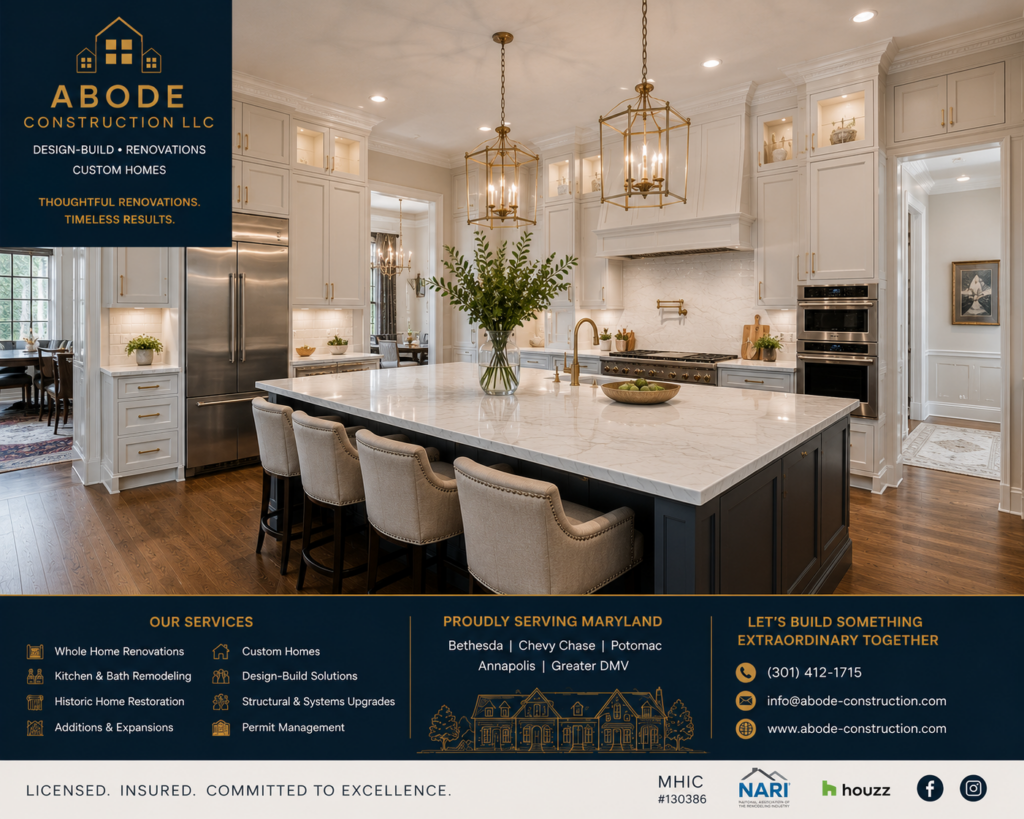
The difference between a high-end kitchen and a truly luxurious one is usually invisible at first glance. It lives in the details: soft-close drawer mechanisms that are still smooth five years later, stone that was selected for veining consistency rather than just color, cabinetry built to exact ceiling height instead of left with a gap, and lighting that adjusts to the task at hand rather than staying at one static brightness.
Luxury is also found in what you do not see. Concealed ventilation, integrated appliances behind panel-matched doors, cable management built into islands, and plumbing routed to avoid visual clutter all contribute to the refined, uncluttered feeling that defines high-end kitchen design.
Which Kitchen Layout Works Best for Luxury Homes?
There is no single best layout, but there are layouts that consistently perform well in larger, higher-end homes. The kitchen triangle (sink, range, refrigerator) remains a foundational planning concept, but luxury kitchens often expand on that framework with separate zones for prep, cooking, cleanup, and entertaining.
| Layout Type | Best For | Common in Maryland Homes |
| Large Island with Perimeter Run | Entertaining, open-plan living, family kitchens | Yes, common in estate homes with open floor plans |
| Galley with Butler’s Pantry | Serious cooking, high-volume food prep | Common in older Bethesda and Potomac homes |
| L-Shape with Dedicated Prep Zone | Mid-size kitchens, efficient traffic flow | Frequent in Rockville, Silver Spring, and Olney renovations |
| U-Shape with Integrated Seating | Families with children, multi-use kitchens | Common in Germantown and Clarksburg developments |
When renovating an older Maryland home, structural constraints often dictate how much layout flexibility exists. Load-bearing walls, existing plumbing stacks, and HVAC runs can all affect where the island goes, where the range can be positioned, and how far the sink can move. This is where having architecture and construction under the same roof becomes genuinely valuable, because those decisions get made with full structural awareness from the start. If you are thinking through a major project, planning a luxury home renovation in Maryland involves more structural pre-planning than most homeowners initially expect.
What Are the Best Materials for a High-End Kitchen Renovation?
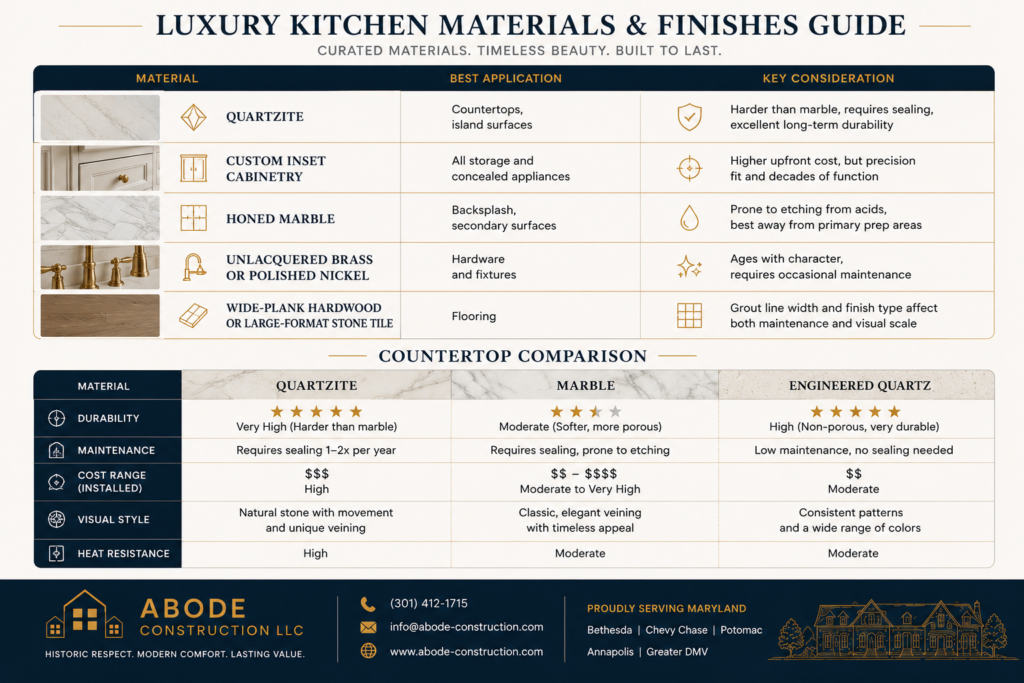
Material selection is where a luxury kitchen renovation separates itself from a premium cosmetic remodel. The materials used in a truly refined kitchen are chosen for longevity, visual consistency, and how they hold up under daily use, not just for how they photograph.
| Material | Best Application | Key Consideration |
| Quartzite | Countertops, island surfaces | Harder than marble, requires sealing, excellent long-term durability |
| Custom Inset Cabinetry | All storage and concealed appliances | Higher upfront cost, but precision fit and decades of function |
| Honed Marble | Backsplash, secondary surfaces | Prone to etching from acids, best away from primary prep areas |
| Unlacquered Brass or Polished Nickel | Hardware and fixtures | Ages with character, requires occasional maintenance |
| Wide-Plank Hardwood or Large-Format Stone Tile | Flooring | Grout line width and finish type affect both maintenance and visual scale |
How Should You Approach the Renovation Process Step by Step?
- Define how the kitchen is actually used: Cooking frequency, entertaining style, storage needs, and traffic patterns should inform every design decision that follows.
- Assess structural constraints: Identify load-bearing walls, existing plumbing locations, electrical panel capacity, and HVAC positioning before any design is finalized.
- Establish a realistic budget with contingency: Kitchen renovations in high-end Maryland homes often uncover pre-existing conditions that require remediation. A contingency of 15 to 20 percent is a reasonable planning benchmark.
- Select a design-build firm or general contractor: For renovations involving structural changes, layout modifications, or premium finishes, a firm that manages architecture, design, and construction together significantly reduces coordination risk.
- Finalize layout and material selections: Countertops, cabinetry, flooring, appliances, and fixtures should all be specified before construction begins to avoid costly mid-project changes.
- Pull required permits: Kitchen renovations involving plumbing relocation, electrical upgrades, or structural changes typically require permits in Maryland and DC jurisdictions. Your contractor should manage this process.
- Execute construction in the correct sequence: Structural work, rough-in plumbing, and electrical come before drywall, cabinetry, countertops, and finishes, in that order.
- Punch list and final walkthrough: Review all installed elements against the original specification before signoff. Hardware alignment, grout consistency, appliance calibration, and door swing clearances are common final-stage items.
What Kitchen Features Add the Most Value in Maryland and DC Homes?
Kitchen renovations consistently rank among the highest-returning home improvement projects in resale value analyses, with mid-range and upscale kitchen remodels often recouping a significant portion of their cost at sale, particularly in high-demand real estate markets like Montgomery County, Bethesda, and the broader DC Metro area.
The features that generate the most tangible value in a luxury kitchen tend to be the ones buyers can verify immediately: custom cabinetry that fits the space precisely, professional-grade appliances with recognized brand names, stone countertops in premium materials, and layouts that feel open and functional without wasted space.
- Integrated, panel-matched refrigerator and dishwasher fronts that make the kitchen feel seamless and custom-built
- A large, well-proportioned island with seating on one side and storage or prep functionality on the other
- High-output range or cooktop with proper ventilation sized appropriately for the appliance and the room
- Custom cabinetry built to ceiling height with interior organization systems rather than standard-depth stock units
- Under-cabinet and recessed lighting on dimmable circuits for layered, adjustable light throughout the day
- A dedicated butler’s pantry or scullery for secondary prep and concealed storage
Understanding the difference between cosmetic value and structural value is also critical. A beautiful backsplash on outdated cabinetry does not produce the same return as a complete cabinetry replacement with quality box construction and proper finishes. If you are looking at a significant remodel, reviewing why design-build works better for luxury home renovations can help clarify how an integrated process protects both the budget and the final result.
Common Mistakes to Avoid in a Luxury Kitchen Renovation
- Underestimating ventilation requirements: A high-output range without proper CFM ventilation creates persistent grease, smoke, and odor problems regardless of how beautiful the hood looks above it.
- Choosing stone based on photos rather than slab selection: Natural stone has significant variation between slabs. Always select the exact slabs that will be used in your kitchen, not a representative sample.
- Prioritizing aesthetics over workflow: An island that is too large, positioned too close to the range, or that blocks the refrigerator path creates daily frustration regardless of how impressive it looks.
- Skipping the permit process: Unpermitted work on plumbing or electrical systems in a kitchen can create issues at resale and may not be covered by homeowner’s insurance if a problem arises later.
- Choosing appliances after cabinetry is built: Appliance dimensions drive cabinet dimensions. Finalizing appliance specs before cabinetry drawings are completed prevents expensive conflicts during installation.
- Treating the kitchen as a standalone project in an older home: In many cases, common mistakes during the design-build process begin with scoping a kitchen renovation without accounting for what lies behind the walls.
What Should You Expect From a Full-Service Luxury Kitchen Renovation?
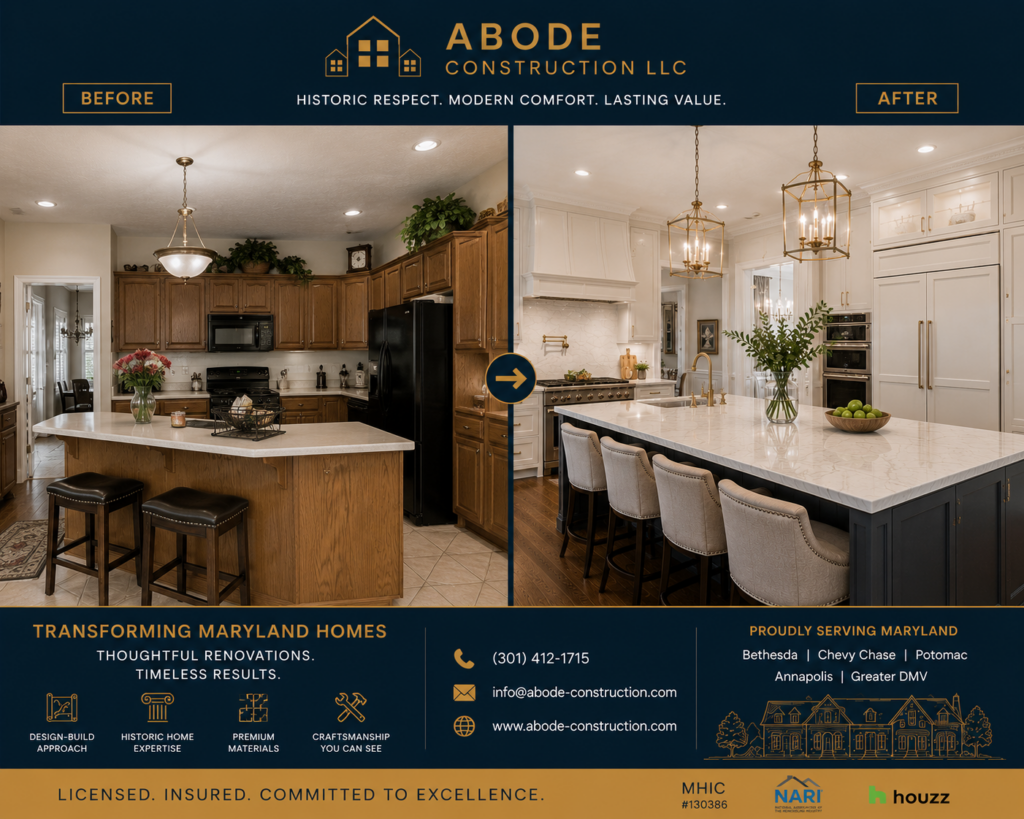
Full-scale luxury kitchen renovations in the Maryland and DC Metro area that involve structural changes, custom cabinetry, premium stone, and high-end appliances typically involve timelines ranging from several months for design and permitting through the construction and installation phases, depending on scope and material lead times.
A credible luxury renovation contractor should provide clear communication from the start: what is included in the scope, what is excluded, what the permit process looks like, and how changes mid-project are handled. Weekly updates, documented daily progress, and a centralized project portal are not luxuries in a high-end renovation context. They are the baseline expectation. Understanding what to expect from a full-service luxury renovation contractor before signing a contract can save significant time and frustration.
In high-value residential neighborhoods across Montgomery County, Bethesda, Potomac, and Chevy Chase, luxury kitchen renovations are frequently integrated into larger whole-home renovation projects rather than treated as isolated remodels, which allows for coordinated structural, mechanical, and design decisions across the entire property.
Frequently Asked Questions
What makes a kitchen look luxury?
A luxury kitchen combines materials, proportions, and details that feel intentional rather than assembled. This includes custom cabinetry built to the full ceiling height, stone surfaces selected slab by slab rather than by sample, integrated appliances that disappear behind panel-matched fronts, and layered lighting on dimmable circuits. The absence of visual clutter, including exposed hinges, mismatched hardware, or upper cabinets that stop short of the ceiling, is often what separates a genuinely refined kitchen from one that simply uses expensive materials.
What is the new look for kitchens in 2026?
Current design directions in luxury kitchens lean toward warmer, more material-driven aesthetics rather than the stark white-and-gray palettes that dominated the previous decade. Warm wood tones on lower cabinetry paired with plaster or limewash finishes on upper sections, integrated stone range surrounds, unlacquered metals that develop patina, and dedicated sculleries or butler’s pantries are increasingly common in high-end renovations. Function is being given equal weight to aesthetics, with layouts designed around how the kitchen is actually used rather than how it photographs.
What is the most functional kitchen design?
Functionality in a kitchen comes from how well the layout matches the household’s actual habits. A single cook who entertains frequently needs different spatial logic than a family of five that cooks daily. That said, kitchens that consistently perform well tend to feature clearly separated zones for prep, cooking, cleanup, and storage, with enough counter space between each station to avoid crowding. An island that serves multiple functions without blocking any of the primary work paths is one of the most reliable additions to a functional high-end kitchen.
What kitchen upgrades add the most home value?
Custom cabinetry, premium stone countertops, professional-grade appliances, and layout improvements that open the kitchen to adjacent living areas tend to generate the strongest value returns in luxury home markets. In Maryland and the DC Metro area, buyers in the upper price brackets evaluate kitchen quality closely, and dated or builder-grade kitchens in otherwise high-end homes are frequently cited as negotiating points.
What kitchen features commonly decrease home value?
Highly personalized choices that appeal to a narrow audience can reduce a kitchen’s market appeal even when the quality of materials is high. This includes bold color schemes on cabinetry, unusual countertop materials with high maintenance requirements, extremely niche appliance configurations, and layouts that prioritize visual drama over usability. Unpermitted work is another significant concern: any electrical, plumbing, or structural modifications done without permits can complicate a future sale and create liability for the seller.
Choosing the Right Partner for a Luxury Kitchen Renovation in Maryland
A kitchen renovation at the luxury level is not a project that benefits from assembling multiple separate contractors and hoping coordination goes smoothly. The decisions made in design affect structural feasibility. The structural decisions affect timeline. Timeline affects material lead times, permit sequencing, and budget management. When those responsibilities are split across separate companies, problems tend to accumulate quietly until they become expensive.
Abode Construction is a veteran-owned design-build firm serving Maryland and the Washington, DC Metro area, including Bethesda, Potomac, Rockville, Gaithersburg, Silver Spring, and surrounding communities. With architecture, engineering, interior design, permitting, and construction all managed under one roof, every phase of a renovation is coordinated from the start, not patched together after the fact.
If you are planning a high-end kitchen renovation as part of a larger home improvement project, the starting point is a conversation about what you are trying to accomplish, what your home currently allows structurally, and what a realistic scope looks like. Abode Construction’s team brings the same discipline and accountability that defines its veteran leadership to every project it takes on.
To start that conversation, contact Abode Construction at (301) 412-1715.

Scott Saling is the owner of Abode Construction LLC, a residential contracting and remodeling company based in Gaithersburg, MD. A second-generation contractor and third-generation Marine Corps veteran, he brings military-level planning, discipline, and attention to detail to every project.
With two combat deployments to Iraq, Scott values clear communication above all, believing that keeping homeowners informed at every stage is key to a successful project. His commitment to transparency, craftsmanship, and customer satisfaction drives every renovation his team delivers.