
A high-end renovation goes far beyond cosmetic upgrades. It involves structural changes, custom design, integrated project management, and premium materials selected for long-term performance. For homeowners in Maryland and the Washington, DC Metro area, understanding this distinction helps clarify why the investment, the timeline, and the team you hire all look fundamentally different at the luxury level.
Not every renovation project is created equal. A standard remodel might refresh a bathroom with new fixtures and tile. A high-end renovation rebuilds the experience of living in a home, from the structural systems behind the walls to the way natural light moves through a redesigned floor plan. If you’re weighing your next major project, knowing where that line is drawn will help you make smarter decisions about what you’re actually getting for your investment.
Key Takeaways
- High-end renovations typically involve architectural design, engineering, permitting, and construction managed by a single integrated team rather than multiple separate contractors.
- Premium materials, custom specifications, and structural changes distinguish luxury projects from cosmetic remodels.
- The planning phase in a high-end renovation is far more detailed and often includes interior design and engineering reviews before a single wall comes down.
- In the Maryland and DC Metro market, high-end renovation starting budgets reflect the complexity, labor quality, and custom scope involved.
- A luxury renovation is a long-term investment in property value, livability, and structural integrity, not just visual appeal.
Things You Must Know
1. The Scope Gap Is Larger Than Most Homeowners Expect
Many homeowners assume a high-end renovation is simply a standard remodel with nicer finishes. In practice, the scope is structurally different. Luxury projects often involve reconfiguring load-bearing walls, upgrading mechanical and electrical systems, and coordinating multiple licensed trades under a single design vision. That complexity requires a different level of planning, permitting, and professional oversight than a straightforward cosmetic update.
2. Who Manages the Project Matters as Much as What Gets Built
In a standard remodel, homeowners frequently manage subcontractors themselves or work with a general contractor who handles execution but not design. In a high-end renovation, the most effective structure is an integrated design-build firm that controls architecture, engineering, interior design, permitting, and construction from the start. This eliminates the communication gaps that cause delays, cost overruns, and mismatched design outcomes. If you’re planning a major project, understanding why design-build is a better fit for luxury home renovations can help you evaluate your options before committing to a team.
3. Budget Minimums Exist for a Reason
Luxury renovations in the Maryland and DC Metro area carry meaningful minimum investment thresholds, not because firms are padding margins, but because the labor, materials, permitting, and design work required to execute at that level simply cost what they cost. Approaching a high-end project with a budget suited to a cosmetic remodel will force compromises that undermine the entire outcome. A professional assessment early in the process helps establish realistic expectations before design work begins.
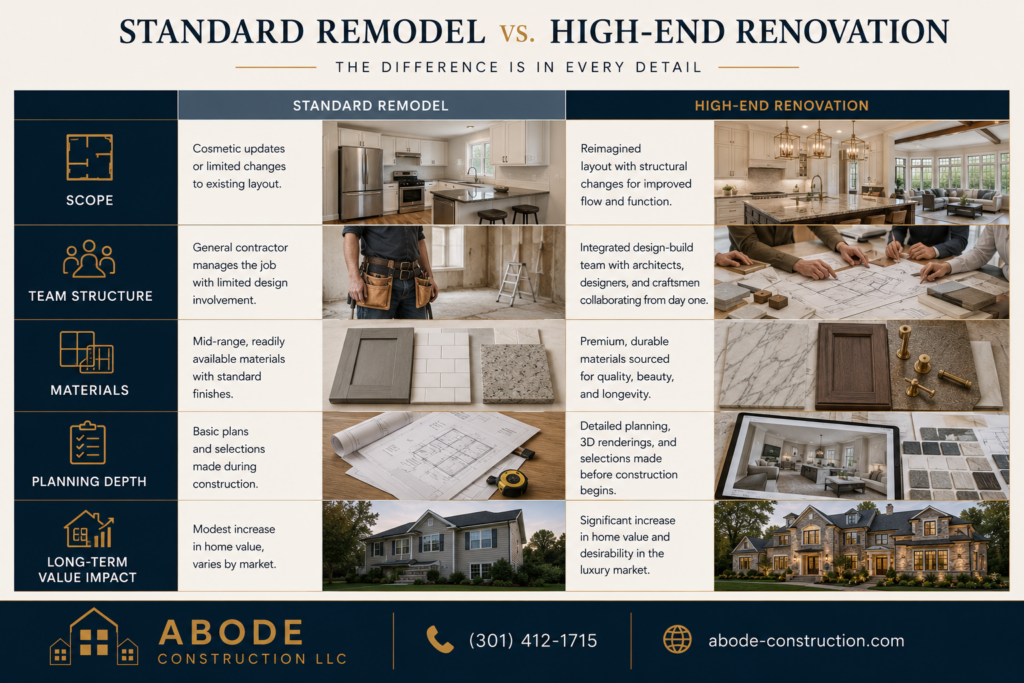
How Do the Two Approaches Actually Differ?
The clearest way to understand the distinction is to look at what each type of project actually involves across several key dimensions.
| Factor | Standard Remodel | High-End Renovation |
| Scope | Cosmetic updates, surface replacements | Structural changes, full system upgrades |
| Design Process | Limited or no architectural input | Architecture, engineering, interior design integrated |
| Team Structure | Homeowner coordinates multiple contractors | Single design-build firm manages everything |
| Materials | Builder-grade or mid-range selections | Custom specifications, premium performance materials |
| Permitting | May or may not be required | Comprehensive permitting managed by the firm |
| Long-Term Value | Incremental improvement | Significant property value and livability impact |
What Goes Into the Planning Phase of a Luxury Renovation?
One of the most telling differences between a standard remodel and a high-end renovation is how much work happens before construction begins. In a standard remodel, planning might mean choosing finishes from a catalog and scheduling a contractor. In a luxury renovation, planning is its own significant phase.
A proper luxury renovation planning process typically includes architectural design, structural engineering review, interior design coordination, permit application and approval, and detailed construction documentation. Each of these layers exists to reduce risk, protect your investment, and ensure the finished result matches the design intent. Skipping any of them is where projects go sideways.
For homeowners approaching this for the first time, it helps to read a practical guide on how to plan a luxury home renovation in Maryland without overwhelming the process before the first consultation.
Why Permitting Complexity Increases at the Luxury Level
Structural changes, additions, and major system upgrades all require permits in Maryland and the DC Metro area. High-end renovations almost always trigger permitting requirements because the scope goes beyond surface work. A design-build firm that handles permitting internally keeps this process on schedule and ensures inspections don’t stall construction. When a homeowner or standard contractor handles permitting as an afterthought, delays are common and costly.
How Do Materials and Craftsmanship Differ?
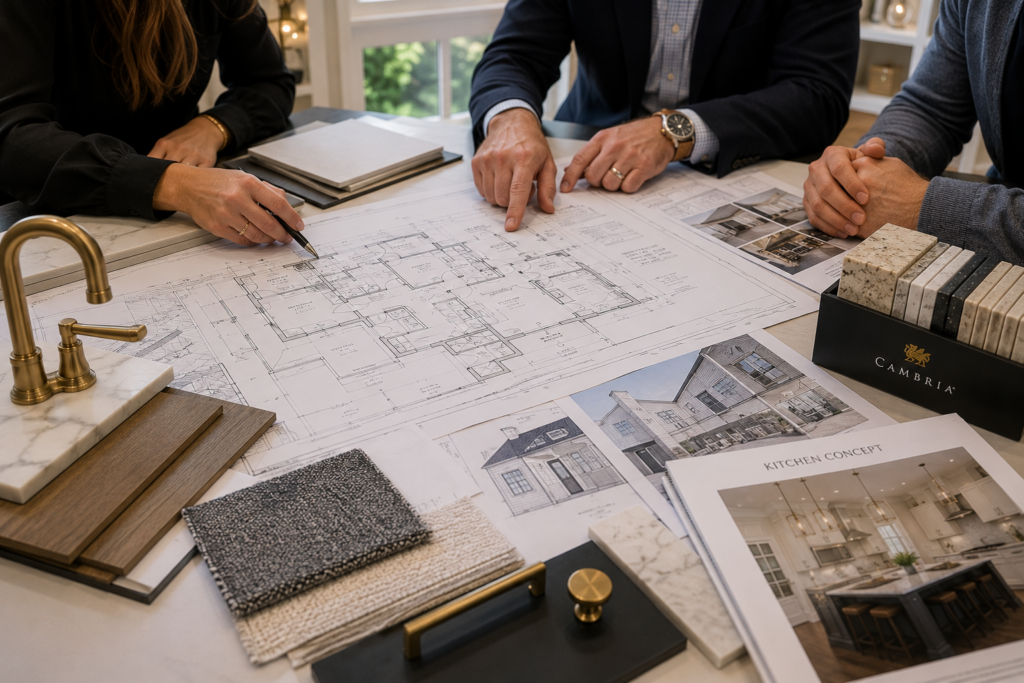
At the standard remodel level, material selection is often driven by what’s available quickly and fits a fixed budget. At the luxury level, materials are selected for performance, longevity, and design coherence. That means custom millwork, engineered stone surfaces, high-performance windows, and systems chosen to work together rather than simply coexist.
Premium materials in a high-end renovation can significantly outlast builder-grade equivalents, with some flooring, cabinetry, and roofing products rated for two to three times the lifespan of standard options, reducing long-term maintenance and replacement costs for homeowners.
Craftsmanship matters just as much as the materials themselves. A luxury renovation requires tradespeople who work at a higher standard of precision, especially for finish carpentry, tile work, custom cabinetry installation, and specialty systems. The quality of execution is what separates a renovation that looks expensive from one that performs and holds up over decades.
What Role Does Structural Work Play?
Standard remodels rarely involve structural changes. A high-end renovation frequently does. Opening a floor plan, adding square footage, creating volume with vaulted ceilings, or reconfiguring a home around a new functional logic all require engineering involvement and structural modification.
This is also where the integration of architecture and construction becomes critical. A structural change that isn’t properly engineered creates risk, and a structural change that isn’t designed with aesthetics in mind creates an awkward result. The best luxury renovations treat structure and design as inseparable.
| Structural Element | Standard Remodel | High-End Renovation |
| Load-bearing walls | Typically untouched | Removed or modified with engineering oversight |
| Foundation work | Rarely addressed | Assessed and reinforced when needed |
| Mechanical/electrical systems | Patched or partially updated | Fully replaced or upgraded to current standards |
| Framing systems | Standard wood framing assumed | May include advanced systems for performance goals |
What Should the Client Experience Look Like?
This is an area where many homeowners don’t know what to expect, and where the difference between a luxury firm and a standard contractor becomes immediately obvious. A high-end renovation firm provides a structured client experience throughout the project, not just at the beginning and end.
At Abode Construction, clients receive access to a dedicated project portal with weekly updates, daily logs, and progress photos. That level of transparency isn’t a luxury add-on. It’s how professional project management is supposed to work on a complex, high-investment project. For a clearer picture of what to expect throughout the process, reviewing what to expect from a full-service luxury renovation contractor is a useful starting point.
A majority of renovation project disputes between homeowners and contractors are attributed to communication failures rather than construction defects, highlighting how critical structured reporting and client communication are to a successful outcome.
How Does a High-End Renovation Affect Long-Term Property Value?
In markets like Bethesda, Potomac, Chevy Chase, and other high-value neighborhoods across Montgomery County and the DC Metro area, a well-executed luxury renovation can meaningfully increase a home’s market position. But the return depends heavily on execution quality, design coherence, and how well the renovation fits the home’s existing character and neighborhood context.
In high-value residential markets, major kitchen and bathroom renovations, along with structural additions, consistently rank among the projects with the strongest return on investment relative to other home improvement categories, according to national remodeling industry data.
For homeowners in Maryland working with older properties, preserving architectural character while modernizing systems and functionality is a nuanced challenge. Getting this balance right requires design experience and deep familiarity with how these homes were originally built. A firm that understands how to modernize an older luxury home while preserving its character can protect the elements that make the home valuable while delivering the performance and functionality today’s buyers expect.
Common Mistakes Homeowners Make When Planning a Major Renovation
- Treating it like a standard remodel: Hiring a general contractor without design-build integration for a project that requires architecture, engineering, and permitting leads to fragmented outcomes and cost overruns.
- Underestimating the planning phase: Rushing into demolition before design and engineering are complete is one of the most reliable ways to generate expensive change orders mid-project.
- Choosing a contractor based on price alone: At the luxury level, the lowest bid almost always reflects either a scope that’s been quietly reduced or a team without the experience to execute at the required standard.
- Ignoring structural and mechanical systems: Focusing only on visible finishes while leaving outdated electrical, plumbing, or HVAC systems in place creates problems that surface after the renovation is complete.
- Not vetting the team’s project management capabilities: A beautiful design executed by a disorganized team still produces a frustrating experience. Transparency, communication systems, and accountability matter as much as craftsmanship.
Many of these pitfalls are covered in more detail in a guide on common mistakes homeowners make during the design-build process, which is worth reviewing before your first contractor conversation.
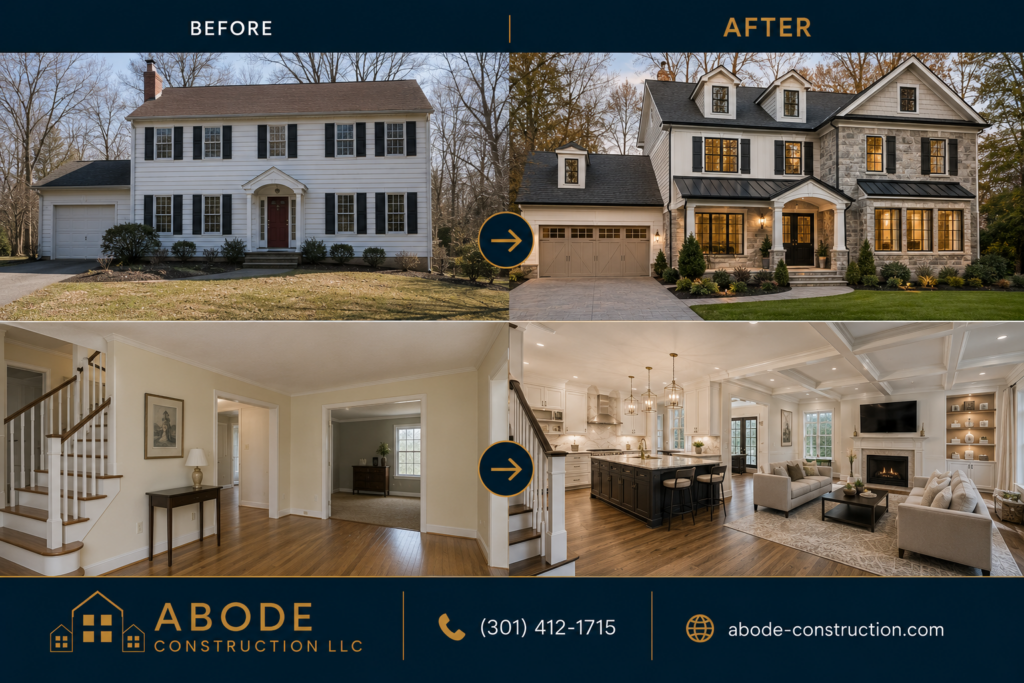
The Process of a High-End Renovation: Step by Step
- Initial Consultation and Project Assessment: The firm reviews the property, discusses goals, and establishes whether the scope aligns with the homeowner’s budget and timeline expectations.
- Design Development: Architects and interior designers develop the project concept, incorporating structural requirements and client preferences into a cohesive plan.
- Engineering and Structural Review: Structural engineers assess any planned changes to load-bearing elements, foundations, or major systems and document requirements for permitting.
- Permitting: The firm prepares and submits permit applications to the relevant local jurisdiction in Maryland or DC and manages the approval process.
- Material Selection and Pre-Construction: Custom materials, fixtures, and systems are specified and ordered, often before demolition begins, to avoid lead-time delays during construction.
- Construction and Trade Coordination: The design-build team manages all trades, inspections, and site logistics under a single point of accountability.
- Finish Work and Quality Review: Detailed finish work, custom installations, and a final walkthrough ensure the completed project meets the design intent and client expectations.
- Project Closeout: Final inspections, permit closeouts, and documentation are completed, along with a transition to any ongoing maintenance guidance.
Frequently Asked Questions
What is the 30% rule for renovations?
The 30% rule is a general guideline suggesting that renovation costs shouldn’t exceed roughly 30% of a home’s current market value if the goal is to maximize resale return. In high-value Maryland markets like Bethesda or Potomac, where home values are already elevated, this threshold is often higher before a project becomes financially impractical. It’s a useful starting point, but a professional assessment of your specific property and neighborhood will give you a more accurate picture.
What does a $10,000 bathroom remodel look like?
At $10,000, a bathroom remodel is generally limited to cosmetic updates: new fixtures, a fresh vanity, updated tile on a surface level, and new lighting. It won’t cover structural changes, layout reconfiguration, or a full system upgrade. For homeowners pursuing a luxury renovation that includes a bathroom transformation as part of a larger whole-home project, this budget level reflects a very different scope than what high-end renovation firms typically manage.
What type of remodel adds the most value?
Kitchen and primary bathroom renovations consistently rank among the highest-return projects in residential real estate, particularly in competitive markets like Montgomery County and the DC Metro area. Structural additions that increase square footage also tend to perform well when they’re architecturally integrated and executed at a quality level that matches the existing home. The condition of mechanical systems, the quality of finishes, and the coherence of the design all affect how much value a renovation actually adds at sale.
What are the four types of remodeling?
Remodeling projects generally fall into four categories: cosmetic (paint, fixtures, surface finishes), functional (layout changes, system upgrades, improved usability), structural (load-bearing changes, additions, foundation work), and whole-home (comprehensive renovation combining all of the above). High-end renovations typically involve structural and whole-home scope, which is why they require a more integrated team and a more detailed planning process than cosmetic or functional projects.
What is the correct order to renovate a house?
The generally recommended sequence starts with structural work, followed by rough mechanical and electrical systems, then insulation and drywall, followed by flooring, cabinetry, and fixtures, and finishing with trim, paint, and final details. Following this sequence prevents finish work from being damaged during earlier phases. In a high-end renovation, this order is managed by the project team and documented in the construction schedule, so homeowners don’t have to coordinate it themselves.
Choosing the Right Team for a High-End Renovation in Maryland
The difference between a satisfying luxury renovation and a frustrating one usually comes down to the team you hire before a single wall comes down. The right firm brings design, engineering, permitting, and construction together under one accountable structure, communicates consistently throughout the project, and executes with the precision that a significant investment deserves.
Abode Construction is a veteran-owned luxury design-build firm serving Maryland and the Washington, DC Metro area, including Gaithersburg, Rockville, Bethesda, Potomac, Chevy Chase, Silver Spring, and surrounding communities. Founded on military principles of discipline, accountability, and precision, Abode manages architecture, engineering, interior design, permitting, and construction under one roof, so clients have one team and one point of contact from concept through completion.
If you’re planning a high-end renovation and want to understand what the process looks like for your specific property, reach out to Abode Construction at (301) 412-1715 to schedule a consultation.

Scott Saling is the owner of Abode Construction LLC, a residential contracting and remodeling company based in Gaithersburg, MD. A second-generation contractor and third-generation Marine Corps veteran, he brings military-level planning, discipline, and attention to detail to every project.
With two combat deployments to Iraq, Scott values clear communication above all, believing that keeping homeowners informed at every stage is key to a successful project. His commitment to transparency, craftsmanship, and customer satisfaction drives every renovation his team delivers.