
Before hiring a custom home builder in Maryland, homeowners should ask targeted questions covering licensing, local experience, budget transparency, warranties, and communication protocols. The right questions reveal whether a builder has the regional expertise, financial stability, and project management processes to deliver your home on time and within scope. Skipping this step is one of the most costly mistakes Maryland buyers make.
Building a custom home is likely the largest financial commitment you will ever make. Yet most people spend more time researching a car purchase than they do vetting the contractor who will build the place they plan to live in for decades. In Maryland, where land costs, permit timelines, and building code requirements vary significantly across counties, choosing the wrong builder does not just cause inconvenience. It can cost you tens of thousands of dollars and months of your life.
The good news is that a focused set of questions, asked before you sign anything, will tell you almost everything you need to know about whether a builder deserves your trust and your money.
Key Takeaways
- Maryland’s county-by-county permit and zoning landscape means local building experience is not a bonus, it is a prerequisite.
- Budget transparency and a clear change-order process are the single biggest predictors of whether a project stays on budget.
- Warranty coverage varies dramatically between builders; understanding what is included before signing protects you from expensive surprises after move-in.
- Who manages your project day-to-day matters as much as who sells you the project at the start.
- Timeline questions reveal how a builder plans for the inevitable: permitting delays, material lead times, and subcontractor scheduling.
- Asking for references from completed Maryland projects, not just testimonials, gives you verifiable proof of performance.
Why Maryland Specifically Changes What You Should Ask
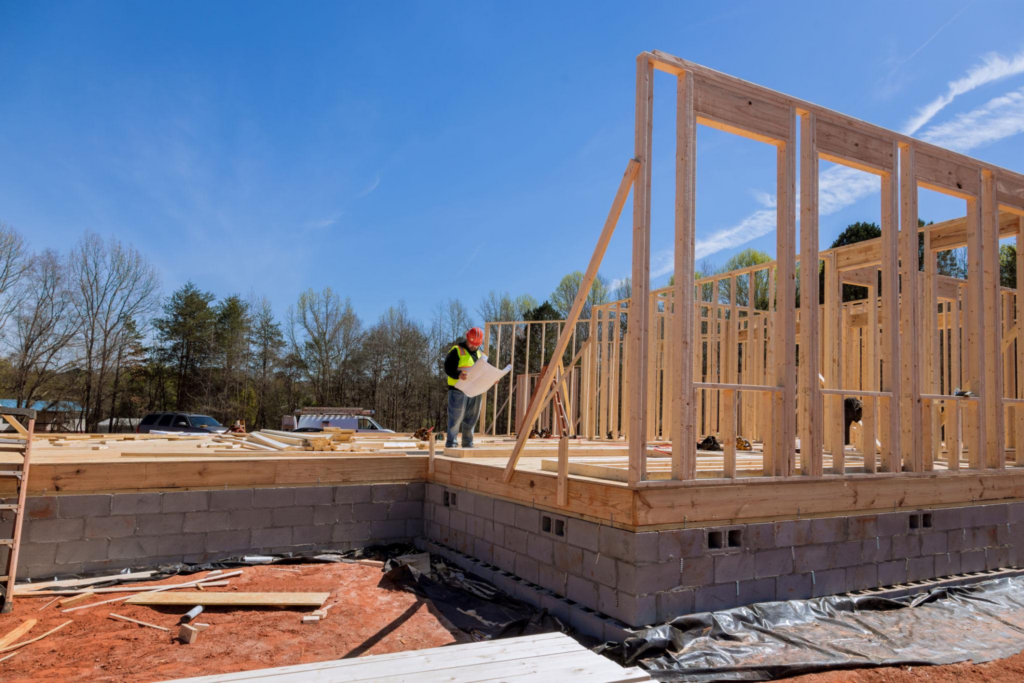
Maryland has 24 jurisdictions, each with its own permit requirements, inspection schedules, and zoning classifications. Montgomery County, for example, operates under substantially more complex stormwater management and forest conservation requirements than many other jurisdictions in the state. A builder who has delivered dozens of homes in one county may still be navigating a learning curve in another. That local familiarity directly affects how accurately they can estimate your permit timeline, which in turn shapes your entire construction schedule.
The state also sits in a climate zone that demands specific attention to moisture management, insulation values, and foundation design. Freeze-thaw cycles, summer humidity, and the occasional severe weather event mean that Maryland homes need to be built differently than homes in the Southeast or the Southwest. Any builder you consider should be able to speak fluently about how their construction methods address these regional conditions.
If you want a deeper look at how to evaluate a builder’s regional fit, the guide on Right Custom Home Builder walks through the full selection framework in detail.
What Is Your Experience With Similar Local Projects?
This question does more work than it appears to. You are not just asking whether a builder has built homes before. You are asking whether they have built homes like yours, in your area, recently. A builder who completed a dozen custom homes in Frederick County five years ago may have relevant experience, but you want to understand how current their knowledge of local subcontractors, suppliers, and permit offices actually is.
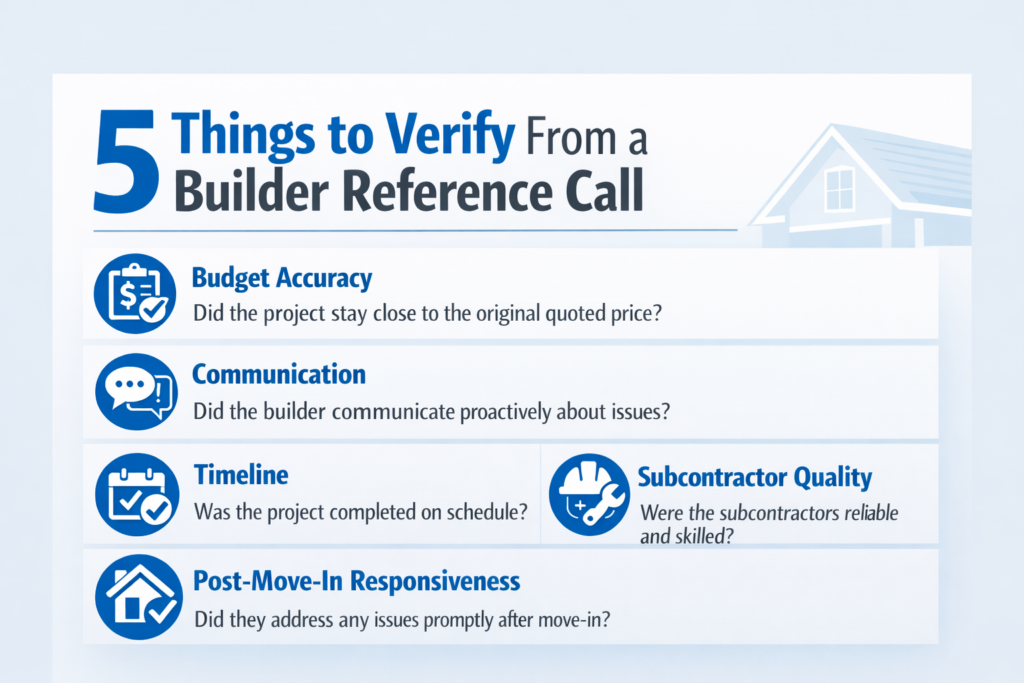
Ask for three to five references from completed Maryland projects in the past two years. When you speak with those homeowners, ask specifically whether the project came in close to the original quoted price, whether the builder communicated proactively about problems, and whether they would hire them again. These three questions tend to surface the real story faster than any general testimonial will.
How Do You Handle Budget Transparency and Change Orders?
Budget overruns are the most common source of conflict between homeowners and builders. Industry data consistently shows that custom home projects can run 10% to 20% over original budget estimates, with change orders being the leading driver of that overage. Many of those change orders are legitimate responses to unforeseen conditions, but some are the result of vague original scopes, low-ball bids designed to win the project, or inadequate pre-construction planning.
A reputable builder will walk you through their change-order process in specific terms before you sign a contract. They should be able to explain how allowance figures are set, what happens when you select finishes above those allowances, and how quickly you will receive pricing on any proposed scope change. A builder who cannot give you clear, specific answers to these questions during the sales process is showing you exactly how they will communicate once your money is on the table.
Understanding the full Cost to Build a Custom Home in Maryland before entering negotiations gives you the baseline you need to evaluate whether any bid is realistic or artificially low.
Step-by-Step: How to Evaluate a Builder Before Signing
- Verify licensing and insurance. In Maryland, home improvement contractors must be licensed through the Maryland Home Improvement Commission (MHIC). Confirm the builder’s MHIC number is current and active, and ask for certificates of general liability and workers’ compensation insurance before any other conversation takes place.
- Review their portfolio for comparable projects. Ask to see completed homes in a similar price range, style, and county to yours. Custom home building spans a wide range of complexity; a builder experienced in $400,000 production-style builds may not be equipped to manage a $1.2 million fully custom project.
- Request a detailed pre-construction cost breakdown. Before signing, ask for a line-item breakdown that separates hard costs, soft costs, allowances, and contingency. Vague “all-in” quotes make it impossible to identify where overruns originate.
- Ask how the design-build process is managed. Understanding the Design-Build Process your builder uses helps you evaluate whether design and construction are coordinated from the start, which reduces costly design revisions mid-build.
- Have a direct conversation about communication expectations. Ask who your day-to-day project contact will be, how often you will receive formal updates, and how decisions are documented. The answer tells you a great deal about how organized the operation actually is.
- Read the contract with an attorney before signing. Custom home contracts are complex legal documents. Before you commit, have a real estate or construction attorney review the payment schedule, lien waiver requirements, and dispute resolution clauses.
What Does Your Warranty Cover?
Maryland law requires home builders to provide a minimum implied warranty on new construction, but the specific terms can vary significantly beyond that legal floor. A standard industry warranty structure typically includes one year on workmanship and materials, two years on mechanical systems including HVAC, electrical, and plumbing, and ten years on structural defects. However, not all builders offer this structure, and some warranties include exclusions that effectively eliminate coverage for the most common post-occupancy issues.
When you ask about warranty coverage, push past the summary. Ask specifically what is excluded, how warranty claims are submitted, and what the average response time is on a warranty service call. Ask whether the warranty is backed by the builder directly or through a third-party warranty company. If a builder is hesitant to give you written warranty terms before you sign, that hesitation is information worth taking seriously.
What Is the Expected Timeline and How Are Delays Managed?
A custom home in Maryland typically takes 10 to 18 months from permit issuance to final walkthrough, though that range shifts depending on home size, finish complexity, and the specific jurisdiction handling your permits. The question is not whether delays will happen; supply chain disruptions, subcontractor scheduling conflicts, and weather events are all part of the reality of construction. The question is how the builder communicates about them and what protections exist in your contract when delays extend beyond agreed thresholds.
Permit timelines in Maryland counties can range from a few weeks to several months depending on jurisdiction backlog and project complexity. Montgomery County and Prince George’s County have historically carried longer permitting timelines than less densely populated counties in Western Maryland or the Eastern Shore. A builder who does not account for this in their initial schedule is either inexperienced in your specific county or presenting an optimistic timeline to win the bid.
Ask the builder to walk you through their scheduling methodology. Do they use project management software? How far in advance are subcontractors booked? What is the protocol when a key trade is delayed? A builder who has clear, practiced answers to these questions has likely been through enough projects to have built systems around these realities.
Who Is My Day-to-Day Contact?
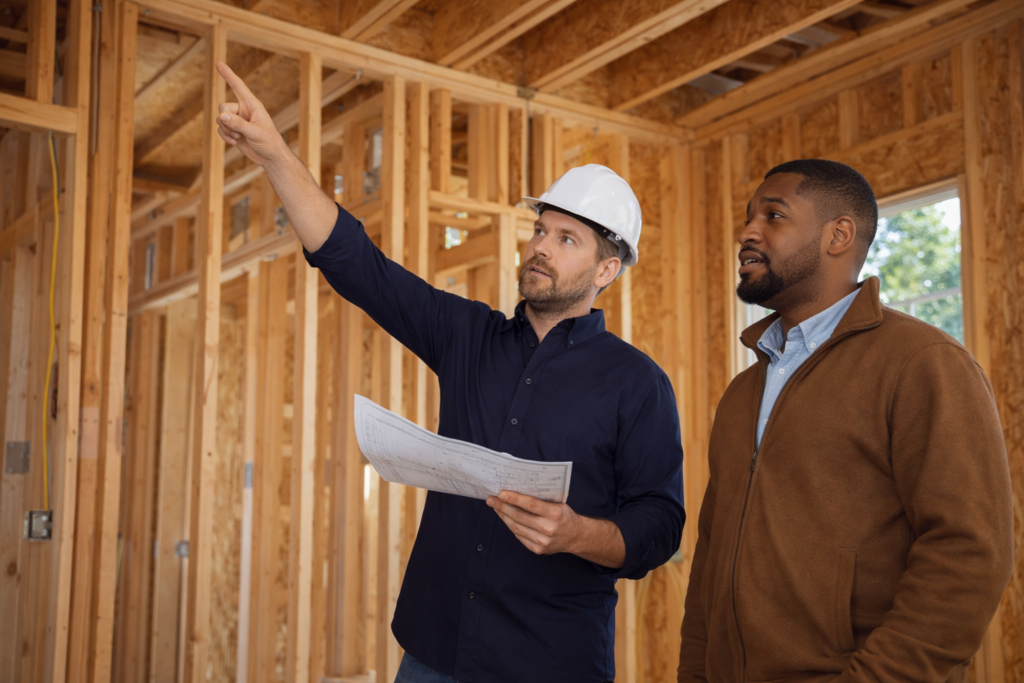
This question often reveals more about a building company’s operational structure than any other. In many custom home firms, a charismatic project developer or sales principal leads the initial meetings, and a separate project manager handles execution. There is nothing inherently wrong with that model, but you need to meet the person who will actually be managing your job, not just the person who wants to win it.
Ask directly: who will be on my site daily? Who do I call when I have a question or concern? How quickly can I expect a response? The answers tell you whether the company has a real operational structure or whether it relies on the founder to be everywhere at once, which becomes a problem the moment your project is one of several running simultaneously.
Key Comparison: Questions That Reveal Builder Quality
| Question | Strong Answer Signals | Warning Signs |
| Local project experience | Names specific counties, recent references, permit knowledge | Vague portfolio, no verifiable local references |
| Budget transparency | Detailed line-item estimates, written change-order process | All-in quotes, verbal assurances, resistance to detail |
| Warranty coverage | Written terms, specific coverage periods, clear exclusions | Verbal only, “industry standard” without specifics |
| Timeline management | County permit knowledge, scheduling software, clear protocols | Optimistic timelines with no contingency discussion |
| Day-to-day contact | Named project manager, defined response times, documented decisions | Founder as sole contact, unclear reporting structure |
Maryland Coverage: Areas We Commonly Serve
Custom home construction questions and considerations apply across the state, though the specifics vary by region. Builders working in the greater Maryland area regularly handle projects across Montgomery County, Prince George’s County, Howard County, Anne Arundel County, Frederick County, Carroll County, Harford County, and Baltimore County, as well as communities along the Eastern Shore. Each area carries its own permitting culture, zoning nuance, and regional building conditions that an experienced local builder will understand before the first permit application is filed.
For homeowners considering significant renovations alongside new construction, the work done on Luxury Home Renovations in Maryland follows many of the same vetting principles outlined here.
Common Mistakes Homeowners Make When Hiring a Builder
- Choosing based on price alone. The lowest bid rarely reflects the actual cost of your project. It often reflects an incomplete scope, low allowances, or a builder who plans to recover margin through change orders once construction is underway.
- Skipping the reference check. Testimonials on a website are curated. A direct phone call with a past client who built a comparable home in Maryland will tell you things no marketing material ever will.
- Not meeting the project manager before signing. The person who sells you the job and the person who runs your job are often two different people. Meet the project manager before you commit.
- Accepting verbal commitments instead of written terms. In custom home construction, if it is not in the contract, it does not exist. Document everything, including design decisions, finish selections, and scope clarifications.
- Underestimating the importance of communication style. A builder who is technically skilled but communicates poorly will cause you significant stress over a 12-to-18-month build. Pay attention to how quickly and clearly they respond during the sales process; that behavior will not improve once construction starts.
- Failing to verify MHIC licensing independently. Do not rely on the builder’s word. The Maryland Home Improvement Commission maintains a public license lookup tool. Check it yourself before you sign anything.
Frequently Asked Questions
What is your experience with similar, local projects?
When asking this question, look for builders who can name specific Maryland counties where they have completed recent projects, describe permit and zoning nuances in those areas, and connect you with verifiable references. A builder who deflects with general statements about “years of experience” without providing specifics is telling you something important about how they will communicate throughout your build. For more on what to look for, the guide on finding the right custom home builder Maryland covers the full evaluation process.
How do you handle budget transparency and change orders?
A trustworthy builder will present you with a detailed pre-construction budget that separates hard costs, soft costs, and allowances, and will have a documented, written process for handling any change orders that arise. You should receive pricing on any scope change before the work is authorized, never after. Ask for a sample change-order form during the interview process; reviewing it in advance tells you exactly how disputes will be resolved when they arise.
What does your warranty cover?
Maryland home builders are subject to minimum statutory warranty obligations, but the quality and breadth of warranty coverage varies significantly above that floor. Ask to see the written warranty document before signing the contract, and look specifically for coverage on workmanship, mechanical systems, and structural components, along with any exclusions that might limit your ability to make a claim. Third-party warranty programs can offer additional protection beyond what a builder provides directly.
What is the expected timeline and how are delays managed?
A realistic custom home timeline in Maryland ranges from 10 to 18 months after permit issuance, with variation based on project size and county. Your builder should be able to explain specifically how they account for permit timelines in your county, how subcontractors are scheduled, and what contractual remedies exist if a project misses agreed milestones by a significant margin. Builders who quote tight timelines without acknowledging these variables are almost certainly underestimating the schedule to win the bid.
Who is my day-to-day contact?
Before signing, you should know the name and role of the person who will manage your project on a daily basis and meet them in person or on a video call. Ask what their current project load is, how often they will be on your site, and how quickly you can expect a response to questions or concerns. A well-run custom home firm has clear accountability structures and will have no hesitation answering these questions directly.
Conclusion: The Right Questions Protect Your Investment
Hiring a custom home builder in Maryland is a decision that will affect your finances, your family, and your daily life for years. The questions outlined here are not obstacles to getting started — they are the tools that help you identify which builders have the experience, the systems, and the integrity to deliver what they promise.
A builder who welcomes these questions and answers them with specificity and confidence is showing you exactly how they will treat you once your project is underway. One who deflects, minimizes, or rushes past them is also showing you something important.
If you are planning a custom home in Maryland and want to work with a team that brings genuine local expertise and transparent communication to every project, Abode Construction is ready to walk you through every step of the process. Call (301) 412-1715 to schedule a consultation and get the answers you need before you commit to anything.

Scott Saling is the owner of Abode Construction LLC, a residential contracting and remodeling company based in Gaithersburg, MD. A second-generation contractor and third-generation Marine Corps veteran, he brings military-level planning, discipline, and attention to detail to every project.
With two combat deployments to Iraq, Scott values clear communication above all, believing that keeping homeowners informed at every stage is key to a successful project. His commitment to transparency, craftsmanship, and customer satisfaction drives every renovation his team delivers.